
This research examines whether stormwater management ponds support bird biodiversity as effectively as natural wetlands. Focusing on red-winged blackbirds, it compares habitat quality and ecological drivers of species diversity. With widespread wetland loss, findings aim to improve pond design and retrofitting to better support wildlife within urban environments.

2026
This research transforms human urine into sustainable fertilizer using solar-powered systems that recover nutrients like nitrogen, phosphorus, and potassium. By turning toilets into decentralized fertilizer factories, the approach improves sanitation, reduces reliance on energy-intensive production, and provides affordable fertilizers to underserved farmers, supporting both environmental sustainability and economic development.

2026
This research addresses rural water scarcity in Colombia by developing a household treatment system combining filtration and solar disinfection. Using engineering models, it optimizes flow, pathogen inactivation, and sunlight exposure to ensure reliability. The approach delivers safe, simple, and sustainable water access, reducing disease and improving quality of life in underserved communities.

This research uses a traffic analogy to explain gas transport challenges in carbon dioxide electrolysis devices. Despite identical porosity, microstructural connectivity determines performance under flooding conditions. Computational modelling reveals how pathway structure affects efficiency, guiding design improvements that enhance CO₂ conversion into fuels and chemicals, supporting scalable and cleaner energy technologies.
2025
This research improves biofuel production from sewage sludge by enhancing cellulose degradation. By isolating and reintroducing naturally occurring bacteria and fungi, sludge treatment efficiency and methane yield increase. The approach reduces waste, supports renewable energy generation, and contributes to replacing fossil fuels with sustainable alternatives.

Lead contamination in drinking water threatens millions. This research combines physics-based pipe models with machine learning to identify lead pipes using vibration data. Generating thousands of simulated signals enabled a classifier with 99% accuracy, offering a noninvasive, cost-effective method to locate hidden lead pipes and support safer water infrastructure worldwide.
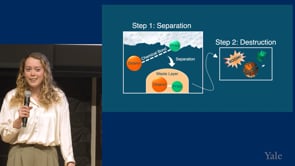
This research presents a simple, low-energy method to remove and destroy PFAS “forever chemicals” from water. By chemically transforming PFAS to behave less like soap, over 98% can be separated and fully degraded, offering a scalable and environmentally friendly solution to widespread drinking water contamination.

This research develops a membrane-based wastewater treatment system that selectively supports nitrogen-removing bacteria without energy-intensive aeration or added organic matter. By enabling efficient biological nitrogen removal, the approach reduces greenhouse gas emissions, lowers costs, and makes advanced wastewater treatment more accessible—protecting aquatic ecosystems and water quality.

Bacteria can cause major industrial failures through metal corrosion, but most bacteria are harmless or beneficial. This research engineers protective bacterial strains to prevent corrosion by sealing cracks, forming biofilms, and outcompeting harmful microbes—transforming bacteria into a sustainable defense for metal infrastructure like pipelines, bridges, and buildings.

PFAS “forever chemicals” contaminate water, food, and air and accumulate in the body, causing serious health risks. This research develops a light-activated porous material that traps and breaks down PFAS molecules. Tested in real-world water and now being scaled up, the method aims to provide a practical, permanent solution for removing PFAS and protecting safe drinking water.