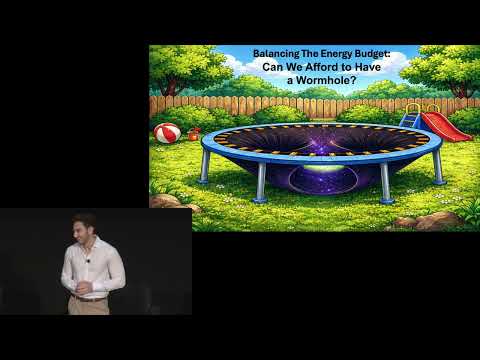
This research investigates whether ordinary matter can generate enough negative energy to keep a wormhole open. Combining theoretical calculations with computer simulations, it finds that nature tightly limits negative energy, making traversable wormholes unlikely. The work highlights how science tests imaginative ideas through rigorous mathematics and physical laws.
Year
2026
Summary
Organisation
Year
2026
Summary
This talk explores how astronomers reconstruct black hole environments using X-ray polarization while reflecting on the fragility of telescopes, scientific archives, and human memory. It connects astrophysical discovery with the preservation of historical records, highlighting the overlooked contributions of women astronomers and the importance of safeguarding scientific heritage.
Organisation
Year
2025
Summary
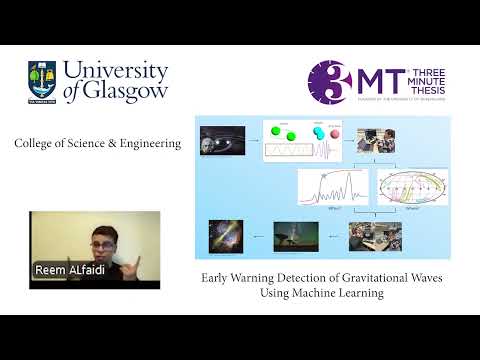
Only five percent of the universe is visible through light, leaving most of it unexplained. Gravitational waves provide a new way to explore this hidden cosmos. By detecting these signals early, researchers can predict cosmic collisions and coordinate telescopes in advance, enabling simultaneous observations that deepen our understanding of the universe.
Organisation