Year
2026
Summary

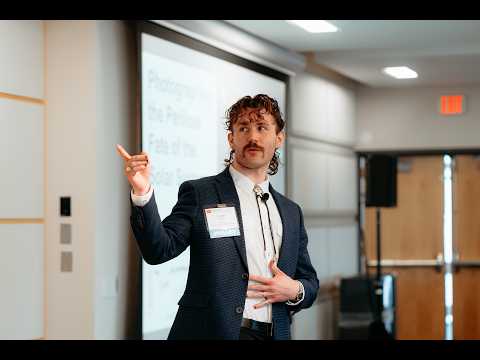
This research investigates white dwarfs and the planetary debris that surrounds them. By developing a technique to detect transiting debris systems, the researcher has expanded the known population of these rare objects, helping astronomers understand how planetary systems evolve, survive, and ultimately break apart after their host stars die.

Organisation
Year
2026
Summary

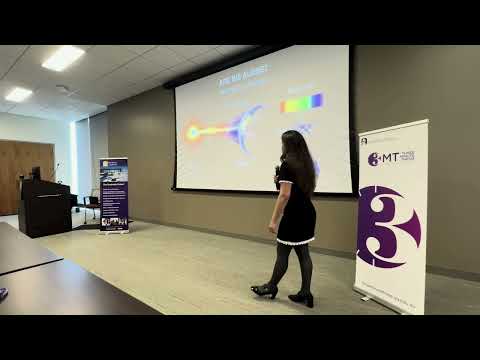
This research uses artificial intelligence and machine learning to analyze light from distant exoplanets. By interpreting atmospheric spectral signatures, it aims to identify potentially habitable worlds and search for signs of life beyond Earth. The work supports future space missions designed to answer one of humanity’s oldest questions: Are we alone?

Organisation
Year
2025
Summary

This research uses artificial intelligence and astronomical data to search for signs of extraterrestrial intelligence. By applying anomaly-detection techniques to telescope images, the project identifies unusual signals or patterns that may indicate intelligent activity, with the ultimate goal of detecting and decoding potential messages from civilizations beyond Earth.

Organisation
Year
2026
Summary

This research investigates the tilt of exoplanets to understand their formation and evolution. By developing a new measurement method, it identifies a Uranus-like tilted planet and enables broader study of planetary systems. These insights help reveal climates, histories, and potential habitability of distant worlds beyond our solar system.

Organisation
Year
2025
Summary

Directly imaging Earth-like exoplanets is one of astronomy’s greatest challenges. Using GLINT, an interferometric instrument on the Subaru Telescope, this research cancels overwhelming starlight to reveal faint nearby planets—paving the way toward discovering another “pale blue dot” and possibly a second Earth.

Year
2025
Summary

The researcher studies how clouds on distant exoplanets affect their climates and potential for life. Working with NASA, they model how exotic materials—like iron or sapphire clouds—absorb and reflect light. They found particle shape greatly influences temperature and habitability, helping determine whether alien worlds could support liquid water and life.

Organisation