Year
2026
Summary

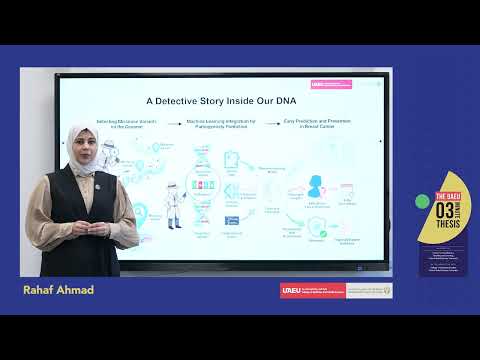
This research applies machine learning to genetic data to distinguish harmless DNA variations from cancer-causing mutations. By treating DNA like a crime scene, the model learns to identify which genetic changes truly drive breast cancer risk, supporting more accurate diagnosis and informed clinical decision-making.

Year
2026
Summary

This research uses artificial intelligence to support treatment decisions for rare diseases. By organizing verified medical knowledge into an AI assistant, it helps clinicians and families access reliable guidance, reducing the treatment odyssey and transforming rare-disease diagnoses into clearer, more hopeful care pathways.

Year
2025
Summary

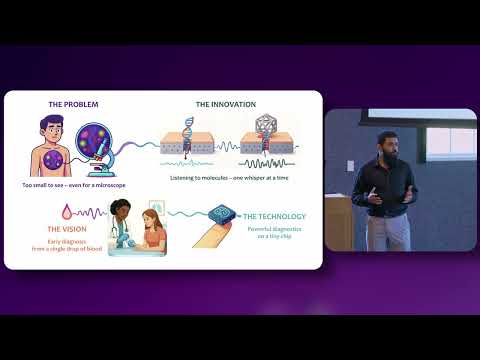
This research develops DNA-origami-enhanced nanopores to detect individual biomolecules from a single drop of blood. By slowing molecules and reading their electrical signatures with machine learning, the technology enables rapid, ultra-early disease diagnosis without traditional laboratory testing.

Year
2025
Summary

This research targets cancer more precisely by focusing on a unique region of the PLK1 protein that drives tumor growth. By designing drugs that bind specifically to this domain using AI and laboratory testing, the approach aims to kill cancer cells while sparing healthy tissue.

Year
2025
Summary

Chickenpox is usually harmless, yet the same virus can cause severe brain infections in some individuals. This research shows that a genetic variant in an immune-system gene reduces antiviral defense, allowing greater viral replication. Identifying such variants helps explain individual vulnerability to severe viral disease.

Organisation
Year
2025
Summary

Genetic cardiomyopathies arise from DNA errors that disrupt vital heart proteins and can be fatal in childhood. This research improves heart-targeted gene therapy by guiding treatments through the bloodstream using chemokine “traffic signals” and avoiding immune interference, enabling therapies to reach the heart more efficiently and potentially cure inherited heart disease.

Year
2025
Summary

This research uses immune cell “molecular fingerprints” to rapidly detect cancer from a single drop of blood. By combining nanosensors and machine learning, subtle changes in B cells can be identified within minutes. The approach offers fast, accurate, and low-cost cancer detection with the potential to significantly improve early diagnosis and survival.

Year
2025
Summary

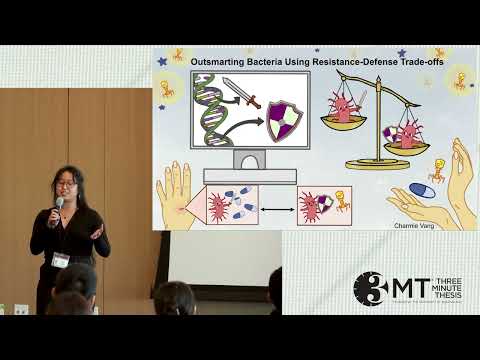
Antibiotic resistance threatens to return medicine to a pre-antibiotic era. This research uses machine learning to study how bacteria balance resistance to antibiotics and bacteriophages. By revealing genetic trade-offs between attack and defense, the work enables smarter combination therapies that exploit bacterial weaknesses and prevent otherwise deadly infections.

Year
2025
Summary

The speaker develops RADARS, a programmable RNA-guided gene-delivery system that activates only in cells with specific RNA “fingerprints.” Their thesis tackles weak activation when target RNA is rare, creating new mechanisms to bind targets more tightly. These innovations aim to enable safer, cell-specific cancer therapies through precise molecular control.

Year
2025
Summary

This project develops an “Aptamer Express,” a DNA-based Trojan horse designed to bypass the brain’s protective barriers, target tumours, and deliver cancer-killing drugs directly to brain cancer cells. The approach aims to overcome treatment resistance, improve precision, and reduce side effects, offering new hope for patients and their families.