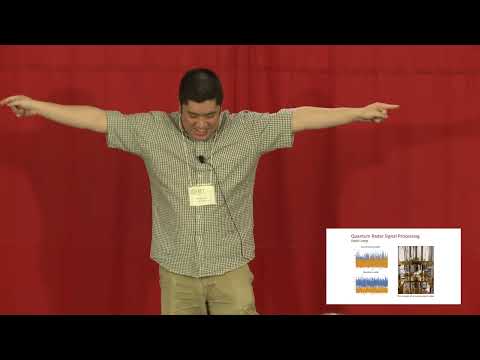
This research explores quantum radar signal processing, using quantum entanglement to improve detection by better separating signal from noise. It demonstrates that quantum radars are experimentally viable and mathematically comparable to conventional systems, with potential advantages. Applications include low-power, safe technologies such as medical imaging and interference-free sensing.
This research addresses the challenge of building stable quantum computers by modelling superconducting qubits. It develops simulation tools to predict behaviour, optimise design, and reduce errors caused by environmental disturbances. By improving qubit reliability, the work supports scalable quantum computing capable of solving complex problems beyond classical computational limits.