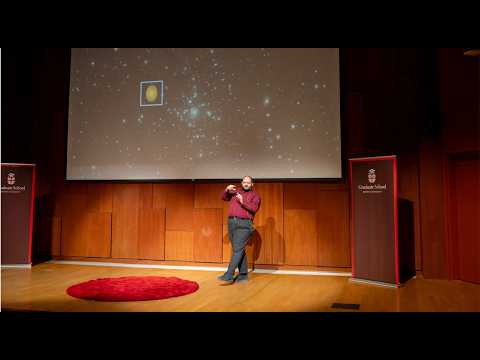
This research investigates whether dark energy, responsible for the universe’s accelerating expansion, evolves over time rather than remaining constant. Using galaxy distributions, supernovae, and cosmic microwave data, new statistical methods suggest evolving models may better fit observations, potentially reshaping our understanding of cosmology and the universe’s long-term fate.
Dark matter makes up most of the universe but cannot be directly observed. This research studies how dark matter halos evolve using cosmological simulations and the principle of maximum entropy. Results show halo entropy increases over time, indicating their evolution toward equilibrium follows fundamental thermodynamic principles.
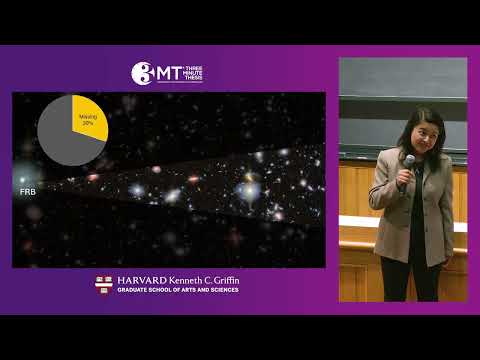
Only five percent of the universe is visible through light, leaving most of it unexplained. Gravitational waves provide a new way to explore this hidden cosmos. By detecting these signals early, researchers can predict cosmic collisions and coordinate telescopes in advance, enabling simultaneous observations that deepen our understanding of the universe.