This research develops a fast algorithm to identify rare gravitational lenses in images from the Euclid Space Telescope. By analysing how galaxies bend light, it maps the distribution of invisible dark matter, helping astronomers investigate one of the greatest mysteries in physics: the nature and composition of dark matter.
2026
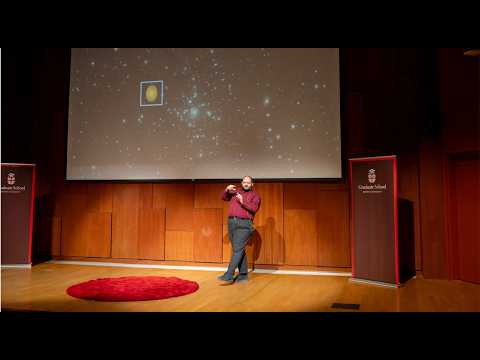
This research uses weak gravitational lensing to map the invisible distribution of dark matter within galaxy clusters. By measuring tiny distortions in the shapes of distant galaxies, it reconstructs total mass distributions, helping scientists understand dark matter, galaxy cluster evolution, and the large-scale structure and history of the universe.
2026
This research uses gravitational lensing to investigate dark matter, the invisible substance that makes up roughly 80% of the Universe's matter. By studying distortions in light caused by massive galaxies, it seeks to identify dark matter structures and determine whether dark matter is clumpy, smooth, cold, warm, concentrated, or diffuse.