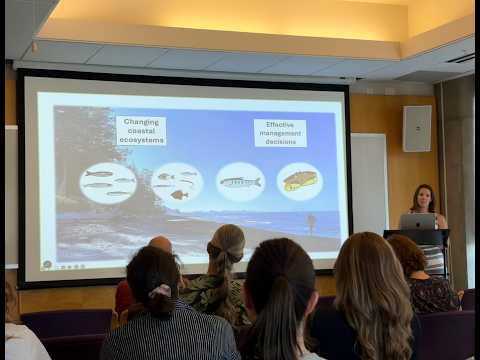
Emily examines how shoreline modification affects coastal fish and crab management in Puget Sound. Her first two chapters show that fish responses to shoreline armor are weak, species-specific, and dependent on spatial scale and life history, while functional diversity differs more among sites than shoreline types. A literature review finds limited direct evidence linking nearshore habitat features to juvenile Chinook salmon growth and survival, except for depth and overwater structures. Her final chapter models Dungeness crab management under illegal harvest, handling mortality, and lost gear, revealing greatest sensitivity to threats removing legal-sized males and highlighting trade-offs among management strategies overall.
This study reviews mangroves of the Americas and their vulnerability to climate change. Mangroves are vital carbon sinks, biodiversity hotspots, and coastal protectors, but face threats from deforestation, pollution, and urban expansion. Effective conservation requires ecosystem-based restoration, improved management, and reduced human pressures to ensure long-term resilience.
Climate change is forcing marine species to migrate across hostile coastal environments. Using environmental DNA from seawater, this research demonstrates a powerful new way to detect and monitor biodiversity, revealing hundreds of species per sample. eDNA offers a scalable, sensitive tool for tracking ecosystem change and guiding conservation in rapidly changing marine environments.