Year
2025
Summary

This research develops bespoke, lightweight breast prostheses for women following mastectomy. Using scans of the residual breast and mastectomy site, the project aims to improve comfort, fit and symmetry compared with conventional silicone prostheses. The ultimate goal is an accessible process that hospitals and cancer centres can implement in-house.

Organisation
Year
2026
Summary

This project developed AI Care, a voice-based caregiving system for people with early-stage Alzheimer's disease. Unlike conventional voice assistants, it uses caregiver-maintained medical records to provide personalised, safety-aware support. By adapting to users rather than requiring users to adapt to technology, AI Care aims to extend safe, independent living at home.

Organisation
Year
2018
Summary

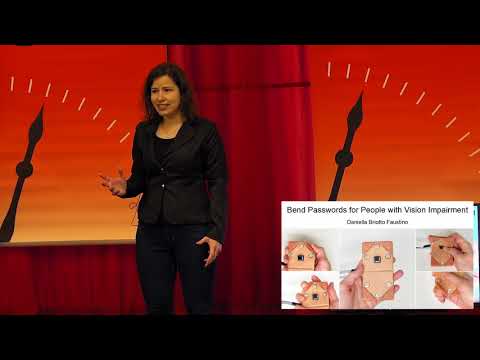
This research addresses password accessibility challenges for people with vision impairment. It examines current difficulties and introduces “bend passwords,” a tactile input method using flexible devices. Early findings suggest they are secure and memorable. The work aims to develop inclusive authentication systems that improve digital security and usability for visually impaired users.

Organisation
Year
2019
Summary

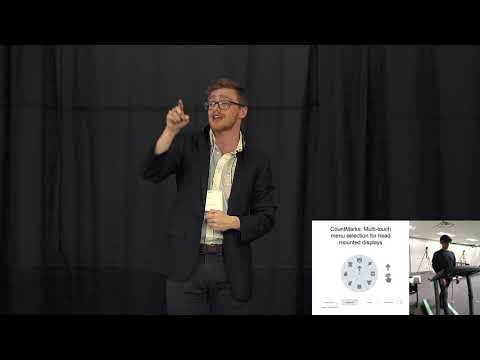
This research introduces “Countmarks,” an ergonomic interaction method for smart glasses using multi-finger gestures on a smartphone. It offers a faster, more accurate, and private alternative to controllers, voice commands, and mid-air gestures. The system improves usability, accessibility, and safety, particularly in real-world contexts like walking or driving.


Organisation
Year
2023
Summary

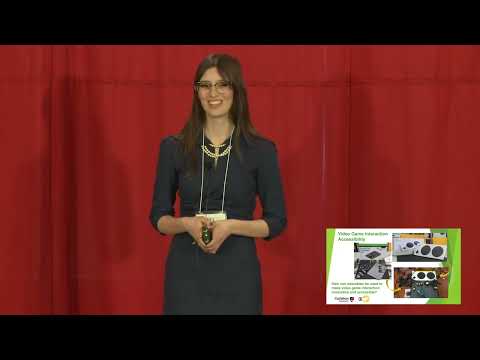
This research explores how wearable technology can improve video game accessibility for players with upper limb disabilities. Through interviews, it develops design guidelines emphasizing flexibility, independence, and modularity. The project aims to build and test prototypes, advancing inclusive gaming design and ensuring disabled players are better represented in interactive technology development.

Organisation
Year
2026
Summary

This research shows that children born without a hand can generate complex muscle signals by imagining movements, enabling control of advanced prosthetics. Their abilities develop similarly to typical motor patterns, challenging assumptions and expanding access to sophisticated prosthetic technology for paediatric patients.

Organisation
Year
2026
Summary

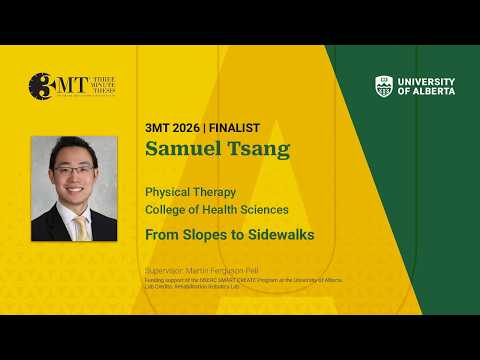
his research develops a classification system for wheelchair navigation based on surface difficulty, inspired by ski trail ratings. By measuring vibration and effort across urban environments, it aims to provide users with actionable information to support safer route choices, reduce injury risk, and improve independence and accessibility in everyday mobility.

Organisation
Year
2026
Summary

This research develops digital twin systems to personalise robotic exoskeleton movement. By integrating biomechanical modelling with real-time robotic control, it enables adaptive, user-specific walking patterns. The approach aims to improve rehabilitation outcomes by making assistive devices more natural, responsive, and aligned with individual movement needs.

Organisation