Year
2026
Summary

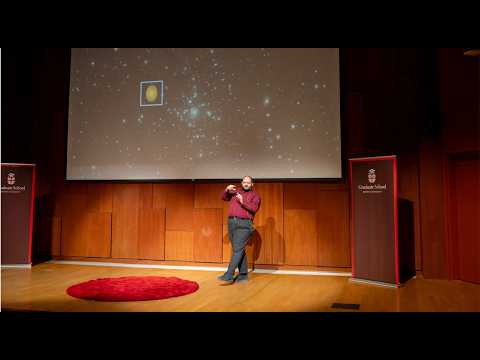
This research develops a fast algorithm to identify rare gravitational lenses in images from the Euclid Space Telescope. By analysing how galaxies bend light, it maps the distribution of invisible dark matter, helping astronomers investigate one of the greatest mysteries in physics: the nature and composition of dark matter.

Year
2026
Summary

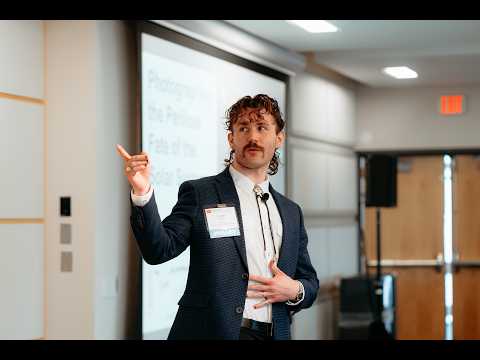
This talk explores how astronomers reconstruct black hole environments using X-ray polarization while reflecting on the fragility of telescopes, scientific archives, and human memory. It connects astrophysical discovery with the preservation of historical records, highlighting the overlooked contributions of women astronomers and the importance of safeguarding scientific heritage.

Year
2026
Summary

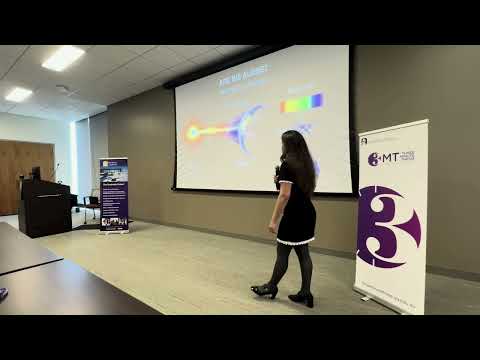
This research uses weak gravitational lensing to map the invisible distribution of dark matter within galaxy clusters. By measuring tiny distortions in the shapes of distant galaxies, it reconstructs total mass distributions, helping scientists understand dark matter, galaxy cluster evolution, and the large-scale structure and history of the universe.

Organisation
Year
2025
Summary

This research combines galaxy simulations with machine learning to study the invisible gas surrounding galaxies. By training a neural network to interpret astronomical observations, the project creates a public tool—the Circumgalactic Dictionary—that enables previously impossible measurements, advancing our understanding of galaxy evolution and the origins of stars, planets, and life.

Organisation
Year
2026
Summary

This research investigates white dwarfs and the planetary debris that surrounds them. By developing a technique to detect transiting debris systems, the researcher has expanded the known population of these rare objects, helping astronomers understand how planetary systems evolve, survive, and ultimately break apart after their host stars die.

Organisation
Year
2026
Summary

This research uses artificial intelligence and machine learning to analyze light from distant exoplanets. By interpreting atmospheric spectral signatures, it aims to identify potentially habitable worlds and search for signs of life beyond Earth. The work supports future space missions designed to answer one of humanity’s oldest questions: Are we alone?

Organisation
Year
2025
Summary

This research uses artificial intelligence and astronomical data to search for signs of extraterrestrial intelligence. By applying anomaly-detection techniques to telescope images, the project identifies unusual signals or patterns that may indicate intelligent activity, with the ultimate goal of detecting and decoding potential messages from civilizations beyond Earth.

Organisation
Year
2026
Summary

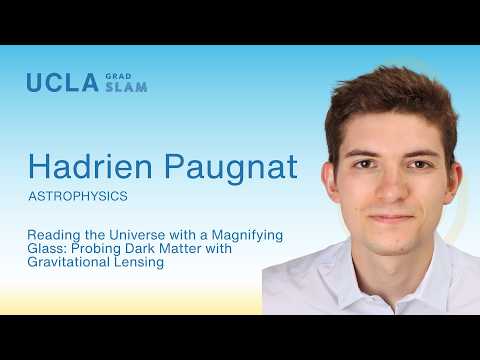
This research uses gravitational lensing to investigate dark matter, the invisible substance that makes up roughly 80% of the Universe's matter. By studying distortions in light caused by massive galaxies, it seeks to identify dark matter structures and determine whether dark matter is clumpy, smooth, cold, warm, concentrated, or diffuse.

Organisation
Year
2026
Summary

This research searches for dark matter, which makes up most of the universe’s mass, by detecting ultralight particles using sensitive quantum sensors. By scanning frequencies like a radio and minimizing noise at cryogenic temperatures, the experiment aims to identify faint signals, bringing scientists closer to understanding the fundamental composition of the universe.

Organisation
Year
2026
Summary

This research investigates the tilt of exoplanets to understand their formation and evolution. By developing a new measurement method, it identifies a Uranus-like tilted planet and enables broader study of planetary systems. These insights help reveal climates, histories, and potential habitability of distant worlds beyond our solar system.

Organisation