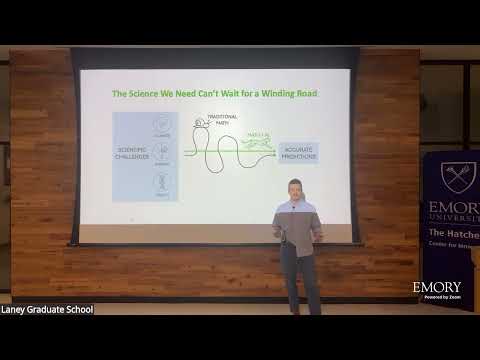
This research uses artificial intelligence to accelerate scientific simulations by learning patterns from traditional mathematical models. Rather than replacing physics, the AI predicts efficient starting points for complex calculations, producing accurate results much faster. The approach could dramatically speed up research in fields such as medicine, engineering, and climate science.
Year
2026
Summary
Organisation
Year
2025
Summary
This research explores human motion as a renewable energy source using nanogenerators made from nanomaterials. By converting everyday body movement into electricity, the work demonstrates a novel, sustainable approach to reducing reliance on fossil fuels and supporting a cleaner energy future.
Organisation
Year
2018
Summary
This research uses ultra-fast femtosecond lasers to study how photovoltaic materials generate and lose electrons. By tracking where electrons form and where they become trapped, the work aims to improve solar panel efficiency. Better photovoltaic materials could make solar energy cheaper, more reliable, and capable of replacing fossil fuels.
Organisation