Year
2026
Summary

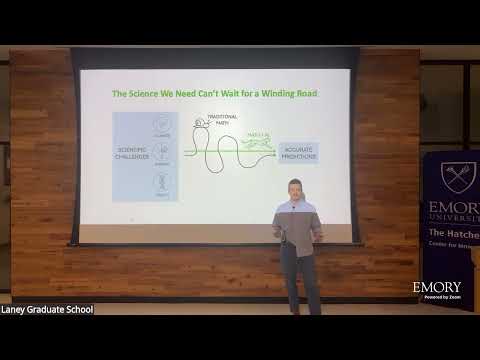
This research investigates how wind transports sand across Mars to improve the safety of future space missions. Combining measurements from Earth-based analogue dunes with computational modelling and NASA satellite data, the approach predicts Martian winds and sandstorms with high accuracy, potentially reducing landing risks and supporting future human exploration of Mars.


Organisation
Year
2026
Summary

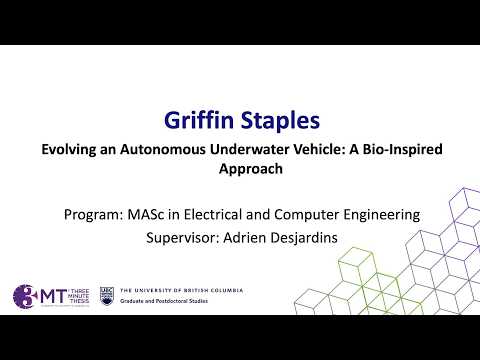
This research develops bio-inspired autonomous underwater vehicles by combining evolutionary simulation with physical prototype testing. Optimising swimmer shape and motion through an iterative feedback loop enables more energy-efficient AUVs capable of long-range ocean monitoring, supporting environmental observation, infrastructure inspection, and maritime surveillance across Canada's vast marine environments.

Year
2026
Summary

This thesis examines cytokine release storm, where the immune system becomes dangerously overactive. Using rat models, mathematical modelling, science and coding, she maps how corticosteroids move through organs and control inflammation. The goal is to optimise treatment for CRS during cancer therapy, COVID or future pandemics.

Organisation
Year
2026
Summary

This research shows that pauses in information streams alter decision-making. After a break, the brain increases effort, giving greater weight to subsequent information—a “peak-after-break” effect. A computational model explains this as a performance-effort tradeoff. Findings challenge traditional theories and suggest strategic pauses can shape attention, memory, and judgment.

Year
2026
Summary

This research uses a traffic analogy to explain gas transport challenges in carbon dioxide electrolysis devices. Despite identical porosity, microstructural connectivity determines performance under flooding conditions. Computational modelling reveals how pathway structure affects efficiency, guiding design improvements that enhance CO₂ conversion into fuels and chemicals, supporting scalable and cleaner energy technologies.

Year
2025
Summary

This research uses atomic-scale computer simulations to design safer, more efficient battery electrolytes. By modelling ion movement like a “river” inside a battery, the project identifies top-performing materials before laboratory testing. The goal is to create faster-charging, higher-capacity, non-toxic batteries that support global renewable-energy transitions and a net-zero future.