Year
2025
Summary

This research investigates how the structure of comb polymers influences their ability to stabilize materials in applications ranging from fragrances and food products to wastewater treatment and drug delivery. By systematically modifying polymer architecture, the study identifies design rules that enable more effective, affordable, and targeted performance across diverse industrial and medical uses.

Organisation
Year
2026
Summary

This research investigates how the shape, size, and surface chemistry of carbon nanomaterials influence their ability to remove contaminants from complex wastewater. By systematically testing nanomaterial variations against pollutants such as microplastics and petroleum derivatives, it aims to establish design rules that enable more effective, real-world water treatment technologies.


Year
2023
Summary

This research shows that antidepressants excreted into wastewater can persist in aquatic environments and alter fish neurobiology, growth, reproduction, stress systems, and behavior. The work argues that antidepressant use carries an environmental cost beyond personal treatment, highlighting the need for better prescribing practices, public awareness, and improved wastewater treatment technologies.

Organisation
Year
2025
Summary

This research improves biofuel production from sewage sludge by enhancing cellulose degradation. By isolating and reintroducing naturally occurring bacteria and fungi, sludge treatment efficiency and methane yield increase. The approach reduces waste, supports renewable energy generation, and contributes to replacing fossil fuels with sustainable alternatives.

Year
2025
Summary

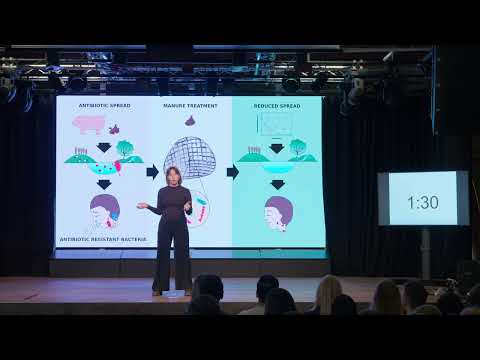
Antibiotic resistance is fueled by antibiotics released into the environment through animal manure. This research shows that aerobic biofilm carrier reactors can degrade up to 92% of antibiotics in manure. Improved manure treatment can reduce environmental reservoirs of resistance and help preserve antibiotics as effective treatments for bacterial infections.

Organisation
Year
2025
Summary

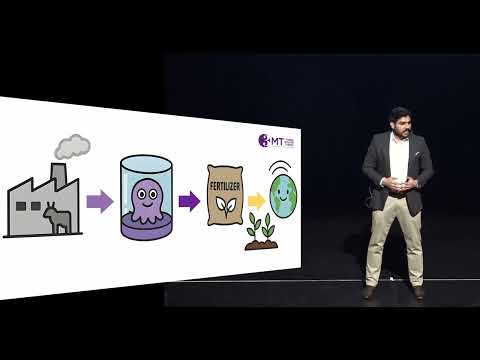
This research uses purple bacteria to treat dairy wastewater, removing nitrogen and phosphorus while producing nutrient-rich biomass. The process reduces pollution and transforms waste into potential biofertilizer, offering a sustainable alternative to chemical fertilizers and a circular solution for dairy farming and agriculture.

Year
2019
Summary

This research develops a membrane-based wastewater treatment system that selectively supports nitrogen-removing bacteria without energy-intensive aeration or added organic matter. By enabling efficient biological nitrogen removal, the approach reduces greenhouse gas emissions, lowers costs, and makes advanced wastewater treatment more accessible—protecting aquatic ecosystems and water quality.

Year
2014
Summary

This research reinvents wastewater treatment by adapting circulating fluidized bed reactors—normally used in petrochemicals—to grow bacteria on small surfaces and efficiently remove waste. Mobile, trailer-mounted reactors provide high-performance treatment without large facilities, making them ideal for dense cities, remote communities, and overburdened systems.