2025
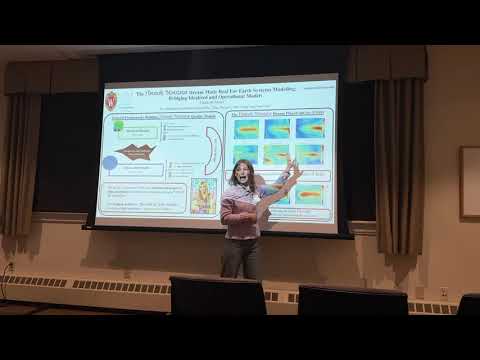
This research develops a machine-learning and data-assimilation framework that combines idealized and operational Earth systems models into a high-resolution, physically realistic “bridging model.” Applied to the El Niño–Southern Oscillation, the approach improves climate simulation accuracy while enabling exploration of alternative climate regimes and physically consistent what-if scenarios.