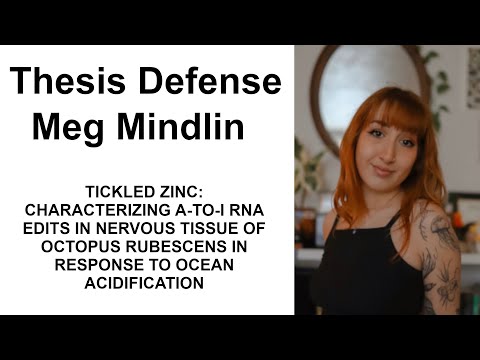
This thesis examines how octopuses respond to climate change at a molecular level, focusing on ocean acidification and RNA editing. Rising temperatures harm octopus reproduction, growth, and survival, while acidification produces mixed effects—some species show stress, yet others demonstrate resilience. Cephalopods overall appear more tolerant of acidification than fish, raising questions about the mechanisms behind this adaptability. Thousands of acidification-responsive edits disproportionately affect C2H2 zinc finger regulators, altering predicted binding targets, including nuclear pore components implicated in stress responses.