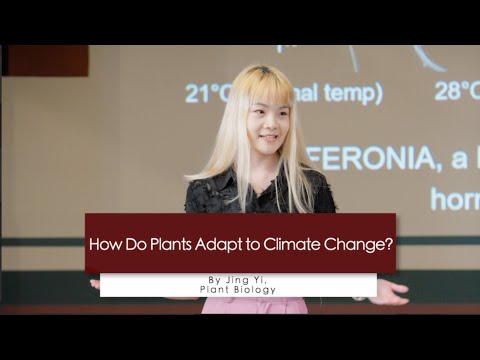
This research investigates feronia, a plant protein essential for heat adaptation. By studying how feronia regulates auxin signaling and plant growth under temperature stress, the work aims to uncover mechanisms that could support the development of heat-resilient crops, improving agricultural productivity and food security in a warming global climate.
This thesis examines how octopuses respond to climate change at a molecular level, focusing on ocean acidification and RNA editing. Rising temperatures harm octopus reproduction, growth, and survival, while acidification produces mixed effects—some species show stress, yet others demonstrate resilience. Cephalopods overall appear more tolerant of acidification than fish, raising questions about the mechanisms behind this adaptability. Thousands of acidification-responsive edits disproportionately affect C2H2 zinc finger regulators, altering predicted binding targets, including nuclear pore components implicated in stress responses.

This research investigates whether heat acclimation affects cold tolerance in soldiers. Participants undergo controlled cold exposure before and after intensive heat training. By measuring temperature regulation, sweating, and dexterity, the study aims to guide military deployment decisions and ensure soldiers can perform confidently across extreme environments.
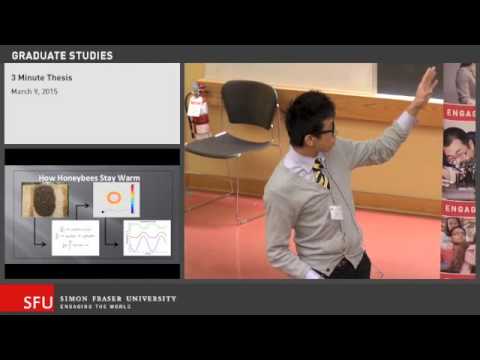
This research develops mathematical models to understand how honeybee clusters survive extreme cold without their hive. Using temperature and density equations, the model predicts how bees move, generate heat, and form insulating layers. Accurate simulations could reduce harmful field experiments and provide biologists with a powerful tool for studying bee behaviour.