This dissertation develops brain-charting methods to support precision psychiatry and neurology by measuring how an individual’s brain differs from population norms. Using normative modelling, it replaces conventional case-control averages with personalised deviation scores across age and disease progression. The research introduces warped normative models for non-Gaussian imaging data and multivariate extreme-value methods for identifying unusual patterns across brain regions. Applications to rare copy-number variants and Parkinson’s disease reveal individual differences obscured by group averages. The defence also examines longitudinal monitoring, environmental influences, resilience, ethics, stigma and clinical implementation, while emphasising that brain deviations alone cannot define pathology or determine treatment.


This research investigates how communication between the heart and brain influences cognition and mental health. By studying heart rate variability, vagus nerve activity, and neural oscillations, it reveals a direct effect of heart rhythms on brain function, offering new insights into schizophrenia, mental illness, and body-based therapeutic interventions.

This research uses a validated rodent model of psychosis to study sensory-filtering deficits linked to schizophrenia. Instead of blocking dopamine D2 receptors, the study uses CDPPB to modulate mGlu5 receptors and reduce D2 hypersensitivity. Treatment restores normal sensory gating, suggesting a promising therapeutic pathway with fewer side effects than current antipsychotics.

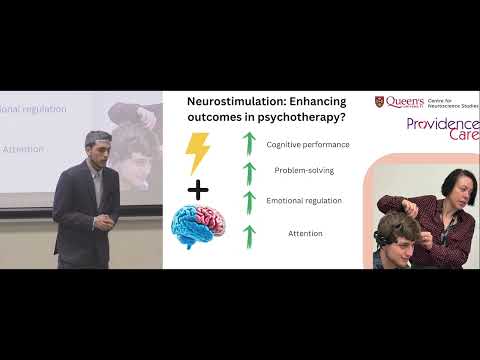
This research investigates transcranial electrical stimulation (tACS) as a non-invasive way to modulate prefrontal cortex activity in people with severe mental disorders such as schizophrenia. By measuring brain activity, cognition, and behavior, the study aims to identify conditions where tACS is effective and offer a safe, accessible therapeutic alternative.