This research investigates whether Alexa can support speech practice for people with Parkinson’s disease. After eight weeks of home use, nine of ten participants developed stronger voices. Although not a replacement for professional speech therapy, voice assistants could provide accessible, everyday opportunities to practise louder, clearer speech outside clinical settings.

2025
This dissertation develops brain-charting methods to support precision psychiatry and neurology by measuring how an individual’s brain differs from population norms. Using normative modelling, it replaces conventional case-control averages with personalised deviation scores across age and disease progression. The research introduces warped normative models for non-Gaussian imaging data and multivariate extreme-value methods for identifying unusual patterns across brain regions. Applications to rare copy-number variants and Parkinson’s disease reveal individual differences obscured by group averages. The defence also examines longitudinal monitoring, environmental influences, resilience, ethics, stigma and clinical implementation, while emphasising that brain deviations alone cannot define pathology or determine treatment.
2017
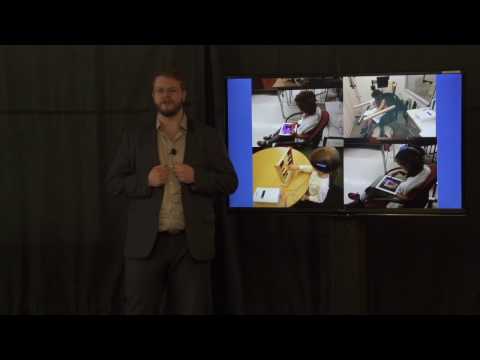
This research explores brain stimulation as a safe, low-cost alternative to medication for children with neurological and mental health conditions. Despite promising results across disorders, only a small fraction of studies involve children. The work aims to expand evidence and access, improving global treatment options, especially for low-income populations.
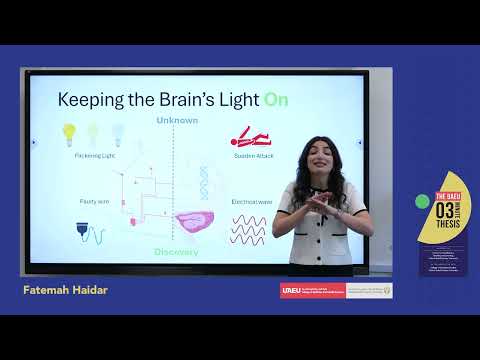
This research investigates episodic ataxia type 1, a rare disorder causing sudden loss of coordination. A genetic mutation triggers abnormal brain firing and electrical waves in the cerebellum. By tracking these waves in mice, the work aims to identify ways to prevent attacks and restore motor control.
Epilepsy affects millions worldwide and can limit everyday activities. Some forms arise from genetic mutations in GABAA_AA receptors, disrupting the balance between brain excitation and inhibition. This research examines how these mutations reduce receptor levels and explores drug strategies to restore inhibition, paving the way for improved epilepsy treatments.

This research develops a novel MRI-based method to detect blood–brain barrier leakage associated with stroke. By comparing pre- and post-contrast brain images, the approach enables early detection, monitoring of treatment response, and risk prediction, offering new possibilities for stroke prevention and improved patient outcomes
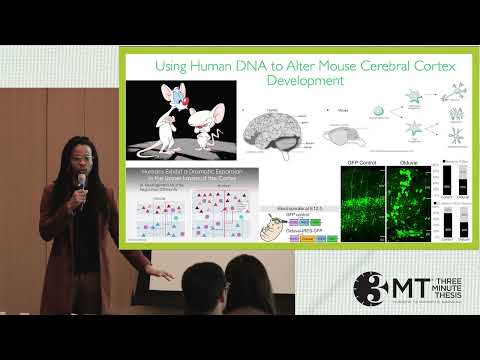
This research inserts a human-specific DNA sequence into mice to study cerebral cortex development. The modified mice show increased upper-layer neurons and glial cells, revealing how human brain evolution supports higher cognition. These findings improve understanding of human brain specialization and the origins of neurological disorders.