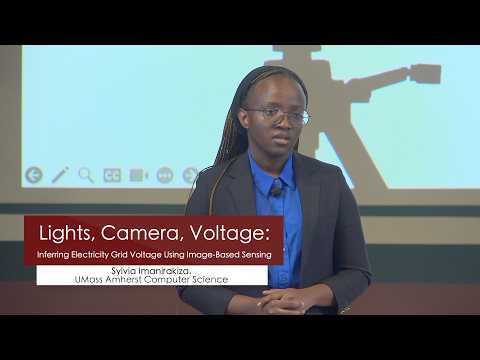
This research uses computational photography and machine learning to monitor electricity quality through the flickering patterns of everyday lights. By analyzing images captured in cities such as Kampala and Nairobi, the work offers a low-cost method for measuring voltage instability and improving power-grid planning in underserved communities lacking reliable electricity infrastructure.
This research explores tidal energy as a reliable renewable source using digital twin technology. By simulating tidal farms in the Long Island Sound, it evaluates performance and environmental impacts before construction. The approach enables efficient, fish-friendly energy design, offering a scalable solution for sustainable ocean-based power generation worldwide.
This research explores using solar energy to heat Canadian homes year-round by storing summer heat for winter use. A novel system uses a sand-based thermal battery beneath a house to retain heat. The work aims to reduce fossil fuel dependence and cut emissions from residential heating, a major contributor to Canada’s greenhouse gases.
This research examines how hydropeaking dams cause fish stranding due to rapid flow changes. Using camera monitoring and modeling, it identifies environmental factors like substrate type and seasonal fish abundance that increase risk. The work highlights the need to balance renewable energy production with ecological sustainability in freshwater systems.
This research uses a traffic analogy to explain gas transport challenges in carbon dioxide electrolysis devices. Despite identical porosity, microstructural connectivity determines performance under flooding conditions. Computational modelling reveals how pathway structure affects efficiency, guiding design improvements that enhance CO₂ conversion into fuels and chemicals, supporting scalable and cleaner energy technologies.