Year
2026
Summary

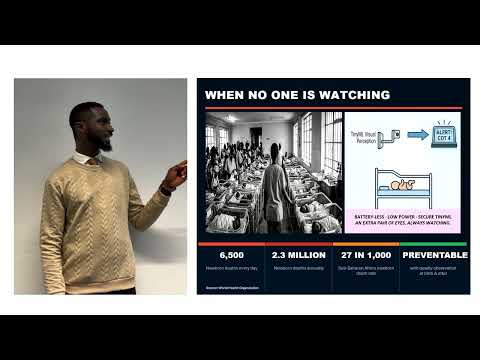
This research develops an ultra-low-power, battery-free newborn monitoring system for under-resourced hospitals. Using on-device artificial intelligence and energy harvesting, it continuously detects signs of distress while protecting patient privacy. The technology aims to support overstretched nurses, enable earlier intervention, and reduce preventable newborn deaths worldwide.

Organisation
Year
2026
Summary

This research develops a distributed multi-robot task allocation framework that enables autonomous robots to estimate tasks, share information, coordinate assignments, and avoid collisions without relying on a central server. The approach improves efficiency, scalability, and resilience, with applications in emergency response, particularly supporting firefighters during life-saving operations.

Year
2026
Summary

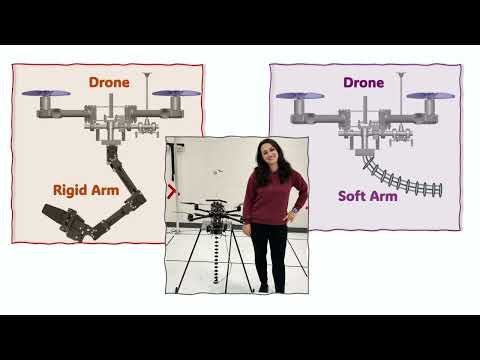
This research develops drones with soft robotic arms capable of safely grasping and transporting objects in challenging environments. By combining predictive modelling with visual feedback, it overcomes control challenges associated with soft materials. The work advances intelligent, adaptive aerial robotics for applications such as emergency delivery and hazardous environments.