Year
2026
Summary

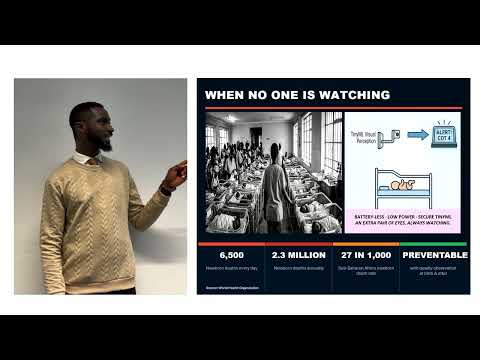
This research develops an ultra-low-power, battery-free newborn monitoring system for under-resourced hospitals. Using on-device artificial intelligence and energy harvesting, it continuously detects signs of distress while protecting patient privacy. The technology aims to support overstretched nurses, enable earlier intervention, and reduce preventable newborn deaths worldwide.

Organisation
Year
2026
Summary

This research improves neural implants for vision restoration by reproducing natural brain activity patterns. Using a two-way stimulation approach in the retina, electrical signals are optimized to activate neurons precisely. This enables more accurate visual perception, moving beyond crude light flashes toward meaningful vision, with potential to restore recognition of familiar faces.

Organisation
Year
2026
Summary

This research develops realistic surgical simulation models using 3D printing to improve training for complex procedures. By enabling repeated practice in a safe environment, the models enhance skill, confidence, and performance. The work aims to make advanced surgical training more accessible while reducing errors and improving patient outcomes.

Organisation
Year
2025
Summary

Tiny errors in electrode placement can determine success or failure of Parkinson’s surgery. This research develops high-resolution Polarization Sensitive Optical Tomography to map brain anatomy at micrometer scale—over 100 times finer than MRI. Automated scanning and 3D reconstruction create detailed connectivity maps, improving surgical precision and neuroscience understanding.


Year
2025
Summary

This research develops an affordable, rapid genetic testing system to personalize antidepressant treatment. By detecting DNA mutations that affect drug metabolism, the technology helps doctors prescribe the right medication for each patient. The goal is to reduce ineffective treatments and improve mental health care—especially for veterans struggling with PTSD and depression.

Year
2025
Summary

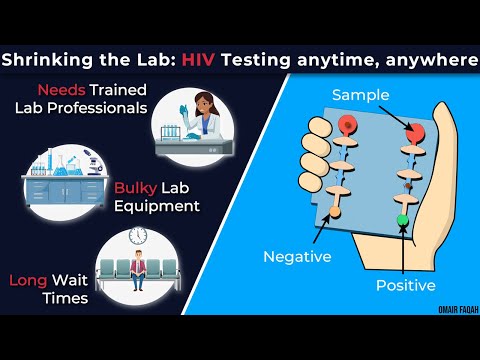
A $2 portable HIV test chip that combines PCR-level sensitivity with home-test simplicity. Using magnetic microparticles, custom probes, and automated processing, it delivers rapid color-change results from a single drop of blood. The system could diagnose HIV and other viruses quickly, affordably, and anywhere.

Year
2025
Summary

Brain surgeons struggle to distinguish tumor from healthy tissue in real time, risking life-altering surgical mistakes. This research uses polarimetric imaging and machine-learning algorithms to reveal tumor borders instantly by analysing subtle differences in tissue structure. Faster, clearer, real-time imaging could revolutionise brain surgery and dramatically improve patient outcomes.