
This research investigates whether Alexa can support speech practice for people with Parkinson’s disease. After eight weeks of home use, nine of ten participants developed stronger voices. Although not a replacement for professional speech therapy, voice assistants could provide accessible, everyday opportunities to practise louder, clearer speech outside clinical settings.

2026
This research investigates the role of force feedback in virtual reality training. By comparing users with and without haptic feedback, it examines effects on brain activity, skill acquisition, and real-world performance. The study aims to improve VR training systems by incorporating sensory input essential for effective motor learning and skill transfer.

This research develops context-aware AI integrated with extended reality glasses, enabling systems to perceive and interact within real-world environments. Applications include language learning and memory support. Findings show such AI fosters more natural, collaborative interactions, enhancing human perception, memory, and decision-making beyond traditional screen-based interfaces.
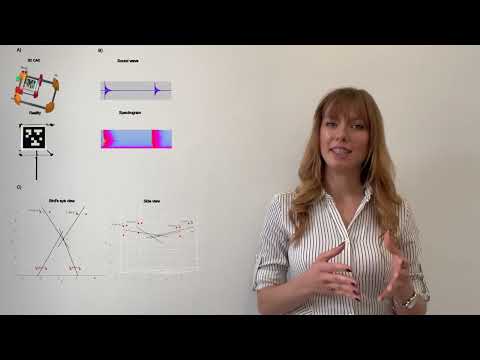
This thesis developed a real-time system for detecting, classifying, and locating sound events using only audio data. A network of 16 microphones and deep learning techniques achieved 96% classification accuracy and average localization error of 1.4 meters, demonstrating that sound-based analysis can effectively replace vision in monitoring applications.

This research exposes a hidden privacy risk in online voting and video conferencing: eye movements captured by standard webcams can reveal user choices. Using AI models, voting decisions were inferred with over 95% accuracy, highlighting that digital security must address behavioral signals—not just encryption.

2025
This research develops a framework for designing haptic technologies in virtual reality that balance immersion and practicality. By accounting for differences in body sensitivity, it introduces affordable, scalable devices—gloves, facial haptics, jackets, and floors—that enable full-body tactile feedback, bringing realistic touch into VR experiences.