This research exposes a hidden privacy risk in online voting and video conferencing: eye movements captured by standard webcams can reveal user choices. Using AI models, voting decisions were inferred with over 95% accuracy, highlighting that digital security must address behavioral signals—not just encryption.
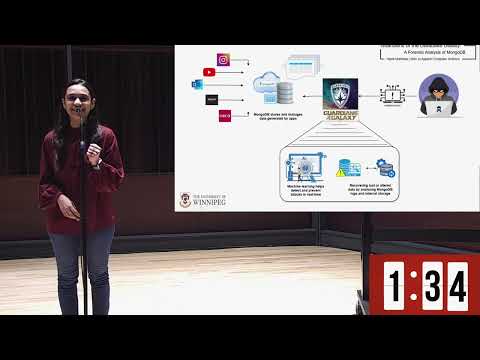
This study looks at how to keep data safe in MongoDB, a type of database used by many businesses to store large amounts of information. As more companies use MongoDB, it becomes a target for hackers who may try to steal or delete important data. While there has been a lot of research into protecting traditional databases, there is less focus on databases like MongoDB. This study explores ways to detect and stop harmful activities in MongoDB, as well as how to recover deleted data. By analyzing the database’s logs, we can track and prevent unauthorized actions. The goal is to create a tool that helps protect databases from attacks like data theft or loss, and ensures data is recoverable if something goes wrong. This tool will help businesses protect their data and recover it when necessary.
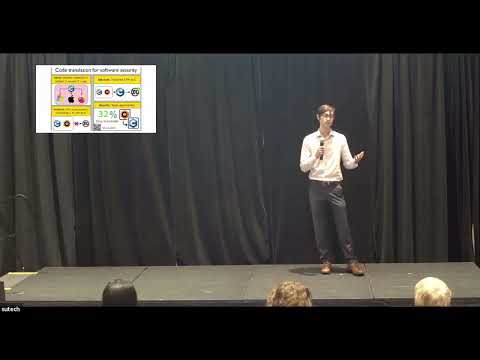
Modern software suffers from widespread memory-safety bugs, largely due to the C programming language. DARPA’s TRACTOR project aims to convert C into the safer Rust language, but real systems mix C and C++. This research develops methods to translate C++ into C, enabling full conversion to Rust and ultimately making software safer.
This research explores how to secure low-power Internet of Things devices using physical-layer security. Instead of relying on computational cryptography, it harnesses randomness in wireless communication channels to achieve strong or even perfect security. As 5G expands device numbers, understanding these mathematical limits is essential for protecting future networks.