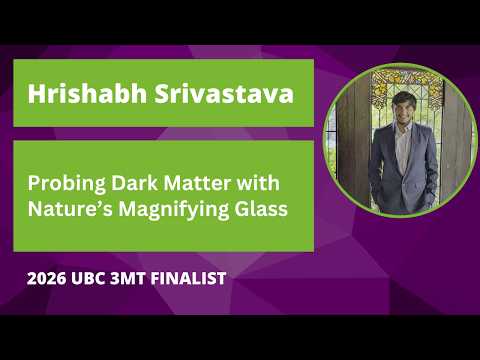
This research develops a fast algorithm to identify rare gravitational lenses in images from the Euclid Space Telescope. By analysing how galaxies bend light, it maps the distribution of invisible dark matter, helping astronomers investigate one of the greatest mysteries in physics: the nature and composition of dark matter.

2026
2025
This research combines galaxy simulations with machine learning to study the invisible gas surrounding galaxies. By training a neural network to interpret astronomical observations, the project creates a public tool—the Circumgalactic Dictionary—that enables previously impossible measurements, advancing our understanding of galaxy evolution and the origins of stars, planets, and life.
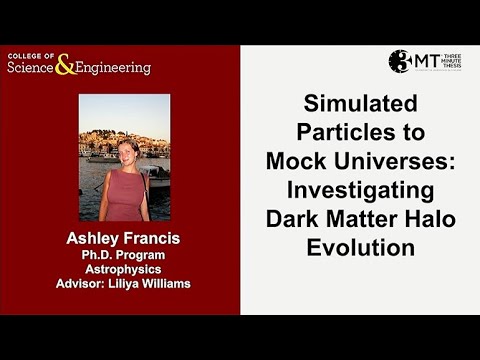
Dark matter makes up most of the universe but cannot be directly observed. This research studies how dark matter halos evolve using cosmological simulations and the principle of maximum entropy. Results show halo entropy increases over time, indicating their evolution toward equilibrium follows fundamental thermodynamic principles.