Year
2025
Summary

This research advances health equity for neurological patients by improving health literacy, engaging communities through participatory research, and implementing evidence-based healthcare practices. By designing communication around patients' lived experiences, it aims to improve treatment adherence, reduce health disparities, strengthen caregiver support, and create more accessible, person-centered healthcare systems.

Organisation
Year
2026
Summary

This anthropological research investigates traditional medicinal uses of psilocybin mushrooms in Lesotho. Interviews with local healers revealed treatment practices that differ substantially from Western clinical models, including low-dose administration over extended periods and applications for epilepsy and psychosis. The findings may broaden future directions for psychedelic medicine research.

Organisation
Year
2017
Summary

This research explores brain stimulation as a safe, low-cost alternative to medication for children with neurological and mental health conditions. Despite promising results across disorders, only a small fraction of studies involve children. The work aims to expand evidence and access, improving global treatment options, especially for low-income populations.

Organisation
Year
2025
Summary

Epilepsy affects millions worldwide and can limit everyday activities. Some forms arise from genetic mutations in GABAA_AA​ receptors, disrupting the balance between brain excitation and inhibition. This research examines how these mutations reduce receptor levels and explores drug strategies to restore inhibition, paving the way for improved epilepsy treatments.

Year
2025
Summary

A researcher explains how anatomical differences in the vagus nerve drive inconsistent outcomes in epilepsy treatment. By dissecting and 3D-mapping human vagus nerves, the team reveals major left–right differences, enabling more precise electrode placement. This work promises safer, more effective nerve stimulation therapies for epilepsy and other diseases.

Year
2025
Summary

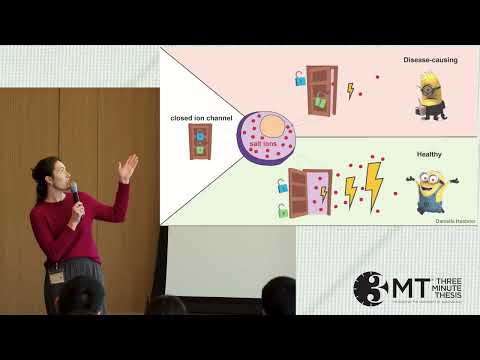
Electrical signals in the body depend on ion channels that regulate salt movement across cell membranes. When these channels malfunction, diseases like epilepsy and heart arrhythmias can occur. This research decodes how faulty ion channels work, revealing potassium-based mechanisms that could restore electrical signaling and guide new therapies.

Organisation
Year
2025
Summary

SLC13A5 citrate transport disorder causes severe neonatal seizures due to disrupted citrate balance in the brain. This research uses mouse models to show excess citrate worsens seizures and explores gene replacement therapy to restore transporter function. Early results show reduced seizures, with human clinical trials beginning soon.