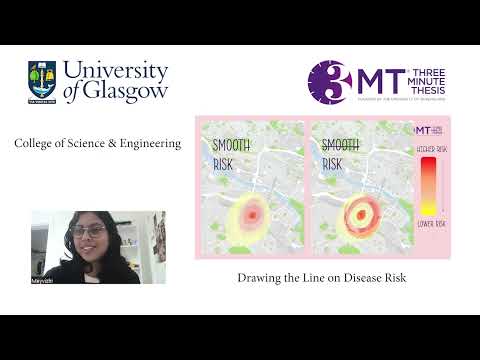
This research improves disease mapping by using mixture modeling to capture sharp spatial differences in health risk. Unlike traditional models that assume smooth patterns, this approach better identifies high-risk areas, enabling more accurate resource allocation, improved public health policy, and reduced health inequalities during disease outbreaks.
This research uses agent-based modelling (ABM) to simulate infectious disease spread in regions like Nigeria, enabling policymakers to predict outbreaks, test interventions, and allocate limited resources proactively. The low-cost modelling approach supports governments with constrained budgets and offers a sustainable, data-driven tool for preventing large-scale infections and improving global public health.
This research examines how honeybee queens adjust egg size in response to their environment. Queens in food-rich urban areas lay smaller eggs, while those in rural areas lay eggs 45% larger, producing bees that forage earlier and more often. These findings can guide beekeeping and support pollinator health, crucial for global food supply.