This research examines how Greco-Roman Egyptians engaged with the pharaonic past through funerary landscapes at Deir el-Medina. Using spatial analysis, it reveals increasing reuse of tombs for burial and habitation over time. These interactions embedded the past into daily life, showing how cultural heritage is actively negotiated within lived environments.

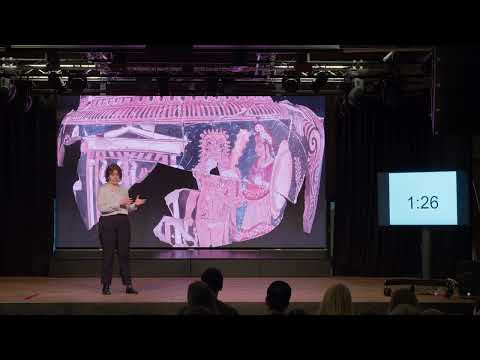
Looted artifacts lose vital historical context, limiting their research value. This project reconstructs lost histories of Greek painted vases by combining warehouse records, stylistic comparison, landscape analysis, and cultural context. Treating artifacts like detective cases allows scholars to reintegrate looted objects into archaeology without legitimizing illegal trade.

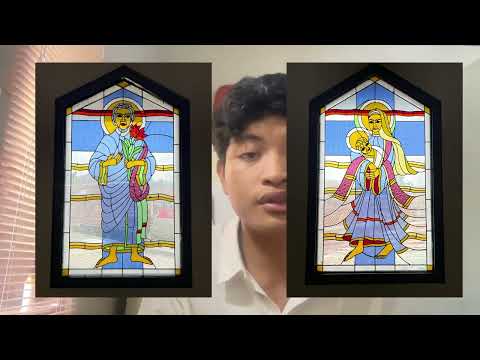
This study analyzes the iconography and meaning of stained glass in the altar of Saint Joseph Catholic Church in Medari, Indonesia. Using Panofsky’s iconographic method, it identifies the depiction of the Holy Family of Nazareth and explains how sacred imagery in altar spaces conveys symbolic, theological, and architectural significance.

The speaker’s archaeological research in Peru reveals that the Moche incorporated Algarrobo trees into human-sacrifice rituals, possibly viewing the tree as an ancestor. Linguistic evidence, myth, and burial patterns suggest deep spiritual ties between people, trees, and memory. The work challenges modern assumptions and reconstructs ancient worldviews.