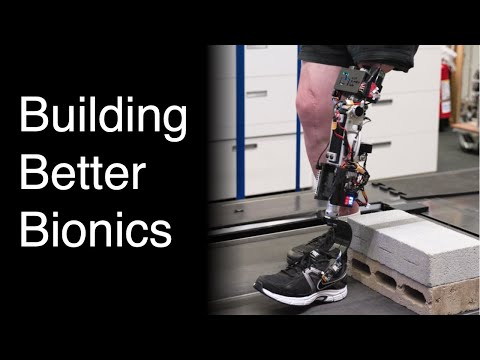
This defense argues prostheses must exchange information, not just energy, with the nervous system. It combines soft-tissue AMI revision, osseointegration with implanted electrodes (OMP), and impedance control to enable continuous powered-knee modulation. Pilot studies show improved neuromechanics, cortical activation, cleaner EMG, better task performance, and greater embodiment versus socket-based approaches.

The speaker shows that using simple hand gestures helps students make abstract fraction concepts concrete. After analyzing fourth and fifth graders’ problem-solving, they found that gestures representing fraction size predicted higher performance. Gesture-based instruction is free, equitable, and effective across demographic groups, offering a powerful tool to improve math learning.