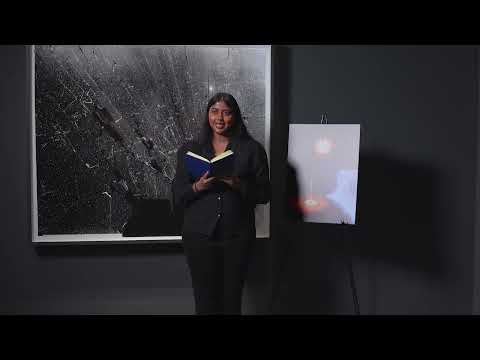
This talk explores how astronomers reconstruct black hole environments using X-ray polarization while reflecting on the fragility of telescopes, scientific archives, and human memory. It connects astrophysical discovery with the preservation of historical records, highlighting the overlooked contributions of women astronomers and the importance of safeguarding scientific heritage.
2026
This research investigates whether dark energy, responsible for the universe’s accelerating expansion, evolves over time rather than remaining constant. Using galaxy distributions, supernovae, and cosmic microwave data, new statistical methods suggest evolving models may better fit observations, potentially reshaping our understanding of cosmology and the universe’s long-term fate.