Variants weaken current COVID vaccines because they target parts of the spike protein that mutate. This project uses nanoparticles displaying engineered versions of the conserved RBD region to steer the immune system toward making broadly protective antibodies. Computational design helps optimize immune targeting, potentially eliminating yearly boosters and protecting against future coronaviruses.

This talk explains research that teaches legged robots how to walk reliably using machine learning, computer vision, advanced control theory, and Lyapunov-based safety guarantees. By improving robot stability on complex terrain, the work moves us closer to versatile, household multi-purpose robots capable of performing everyday chores safely and independently.

Mel-AI is an artificial intelligence system designed to assist pathologists in distinguishing melanoma from benign moles. By training computer-vision models on 520 cases, the system reached 96% accuracy and interpretable outputs. It offers scalable, objective quality assurance, reducing misdiagnosis risk and improving melanoma detection in high-incidence countries like Australia.

My research improves brain–computer interfaces for children with disabilities by reducing the repetitive calibration needed before use. Using transfer learning and a team-selection algorithm, data from other users help personalise the system, cutting calibration by up to 90%. This makes creative activities like painting more accessible, enjoyable, and sustainable.

Brain surgeons struggle to distinguish tumor from healthy tissue in real time, risking life-altering surgical mistakes. This research uses polarimetric imaging and machine-learning algorithms to reveal tumor borders instantly by analysing subtle differences in tissue structure. Faster, clearer, real-time imaging could revolutionise brain surgery and dramatically improve patient outcomes.

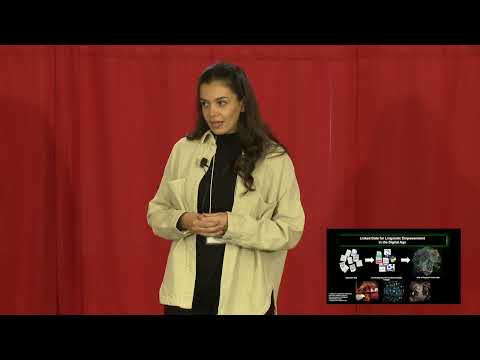
This research uncovers how AI systems like GPT succeed at automatically grouping words—a task that traditionally required manual labeling. Using geometric tools such as convex hulls and Delaunay triangulation, the researcher developed an algorithm that replicates this capability, enabling powerful language models to be built with far fewer computational resources.

My research uses AI and wearable technology to track brain and body signals such as brain waves (EEG), heart rate, and movement. The goal?  Spotting early signs of Alzheimer's and Parkinson's before symptoms show up. Catching these subtle changes could mean helping people sooner, letting them enjoy the everyday moments that matter most