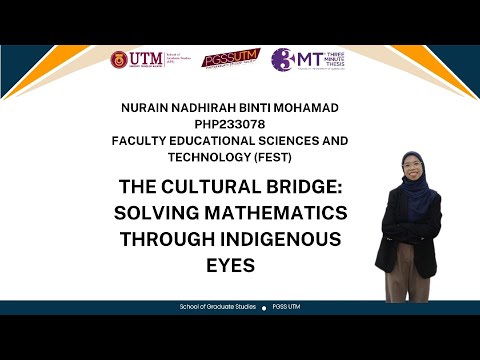
This research uses ethnomathematics to make learning culturally relevant for Indigenous students like Awang. By connecting mathematical concepts to daily life and traditions, it improves engagement, identity, and understanding. The approach supports inclusive education aligned with SDG4, ensuring classrooms adapt to students rather than forcing students to adapt to them.
AI can improve efficiency in humanitarian aid but risks undermining its moral foundation. Research shows donors perceive AI as lacking empathy, leading to reduced engagement and donations. The key challenge is balancing technological efficiency with human connection, ensuring that innovation supports rather than erodes the trust and compassion that sustain aid systems.

This talk reframes mathematics as a creative, pattern-based discipline rather than rote calculation. Through research in topology and prison education initiatives, it highlights math’s role in fostering curiosity, resilience, and critical thinking. The speaker argues that mathematical thinking benefits everyone, promoting perseverance and empathy beyond academic or professional contexts.