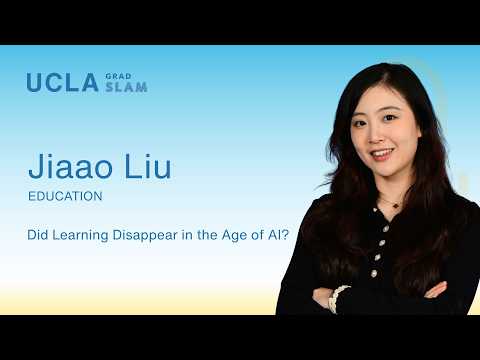
This research examines how multilingual college students use AI writing tools and whether these tools support or hinder learning. The findings suggest that learning outcomes depend on how AI is used. When employed as a scaffold for feedback and reflection rather than a shortcut, AI can enhance writing development and critical thinking.
This research investigates how reliance on AI systems affects human cognition and reasoning. Using concepts from cognitive offloading, the study compares AI-assisted and independent problem solving, measuring verification behavior, reasoning depth, and decision confidence. The work explores whether increasingly capable AI tools may unintentionally reduce critical thinking and human expertise.
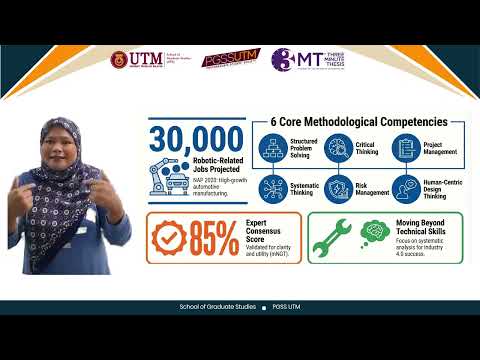
This research addresses the growing skills gap in Malaysia’s automotive robotics sector. It develops a competency framework emphasizing problem-solving, critical thinking, and structured methodologies. Validated by experts, the framework aligns education with industry needs, helping graduates better prepare for automation-related jobs and improving workforce readiness in a rapidly evolving industry.
This talk reframes mathematics as a creative, pattern-based discipline rather than rote calculation. Through research in topology and prison education initiatives, it highlights math’s role in fostering curiosity, resilience, and critical thinking. The speaker argues that mathematical thinking benefits everyone, promoting perseverance and empathy beyond academic or professional contexts.