Year
2023
Summary

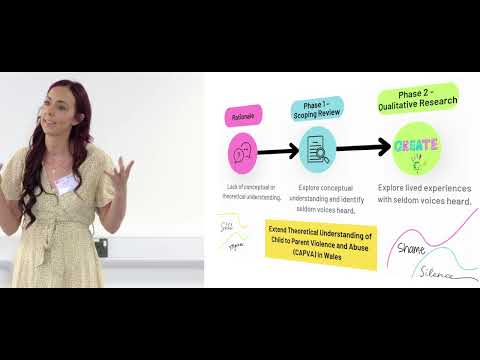
This PhD investigates child-parent violence and abuse in Wales, a hidden and stigmatised problem lacking clear definitions and theoretical understanding. Through a scoping review and collaborative qualitative research, she will examine stakeholder perspectives and overlooked lived experiences, aiming to co-create knowledge that supports safer, more effective interventions for families.

Organisation

Year
2026
Summary

This research explores whether altering bodily sensations can change emotional experiences. By manipulating perceived heartbeat, blinking, and muscle tension through wearable devices and virtual reality, it demonstrates that emotions can be reshaped without changing physiology, opening new possibilities for treating trauma, anxiety, eating disorders, and other mental health conditions

Organisation
Year
2026
Summary

This thesis examined how adverse childhood experiences (ACEs) affect mental health and brain development. Using data from the ABCD Study, the researcher found that ACEs were linked to both mental health symptoms and a thicker prefrontal cortex. The findings suggest the brain may adapt to adversity, highlighting new questions about resilience.

Organisation
Year
2026
Summary

This thesis examines the relationship between architecture and domestic violence, arguing that traditional ideas of home and privacy can obscure experiences of abuse. It proposes a memorial in Toronto that combines remembrance, advocacy, and community support, using architectural thresholds to promote awareness, healing, and survivor empowerment.

Year
2026
Summary

This oral history research explores silence as a meaningful form of communication rather than an absence of speech. Through documentary interviews with family members, the project examines how silence can express fear, shame, power, and agency, challenging dominant assumptions about listening and revealing how discomfort often prevents deeper understanding and connection.

Organisation
Year
2026
Summary

This research examines dismemberment in early modern drama to explore how cultural systems shape human responses to violence. By analysing plays such as Titus Andronicus, the project argues that fear and disgust are historically conditioned rather than purely instinctive, revealing how societies teach audiences to interpret violent imagery across different historical periods

Organisation
Year
2026
Summary

This research examines how trauma-related emotional expression influences police perceptions of victim credibility in sexual assault cases. By testing whether brief trauma education reduces bias, it proposes a low-cost intervention to improve investigative decisions. The goal is to ensure victims are believed based on evidence, not emotional display, promoting justice and accountability.

Organisation
Year
2026
Summary

This research investigates risk and protective factors in father–daughter intrafamilial child sexual abuse. Findings show abuse arises from combined individual and family-level factors, especially conflict and violence, while early caregiving and warmth are protective. The work aims to inform earlier intervention, improve prevention strategies, and enhance child safety within families.

Organisation
Year
2025
Summary

This research investigates why women are more vulnerable to stress-related disorders. Using a mouse model of acute trauma, the study shows that estrogen levels in the hippocampus drive memory disruption after stress. Blocking local estrogen production protects memory, revealing sex-specific mechanisms relevant for targeted treatments.