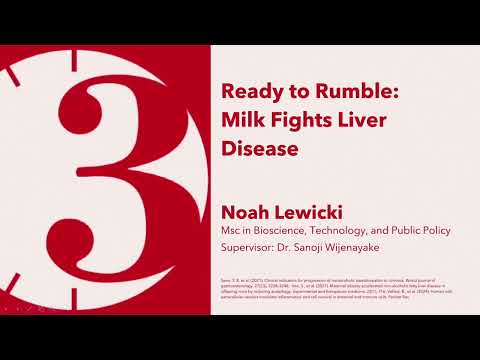
Obesity during pregnancy can have long-term health effects on offspring, increasing their risk of conditions like non-alcoholic fatty liver disease (NAFLD). NAFLD is the most common liver disease in children, and is characterized by excess fat buildup in the liver, leading to inflammation, liver damage and liver failure. Breast/chest feeding helps counteract the effects of obesity, but what about for NAFLD? Human milk contains biological nanovesicles called milk-derived extracellular vesicles (MEVs). MEVs positively influence metabolism and can be anti-inflammatory. My study explores how MEVs impact NAFLD risk in offspring with gestational obesity. I hypothesize that MEVs will provide protection against NAFLD and reduce chronic liver inflammation and fat buildup in offspring. Understanding MEVs’ role could shape policies promoting breastfeeding and the enhancement of infant formulas with MEVs, providing a new approach to improve long-term health outcomes for children.