
This research shows that estrogen directly influences fat taste perception by acting on estrogen receptors within fat-responsive taste cells. Sex differences in fat preference persist even without gut–brain signaling, indicating hormonal regulation at the sensory level. These findings may inform obesity research and strategies to improve dietary behavior and health outcomes.

This talk explains how devastating brain diseases such as Parkinson’s disease and dementia may begin not in the brain, but in the gut. The speaker describes how a protein called alpha-synuclein can change shape, form toxic complexes, and spread from cell to cell, traveling from the gut to the brain via neural connections. Once in the brain, these toxic complexes disrupt movement, memory, and thinking. The research identifies a key protein, FABP2, that promotes this harmful process by interacting with alpha-synuclein. By targeting and breaking this interaction early—at the level of the gut—the work aims to prevent neurodegenerative disease before irreversible brain damage occurs, potentially reducing patient suffering as well as medical and societal costs.
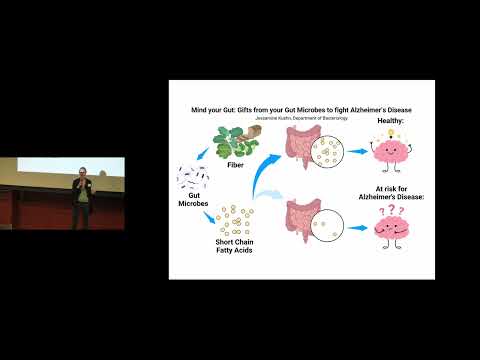
This thesis investigates how gut microbes influence brain health through short-chain fatty acids produced from dietary fibre. Measuring these compounds in stool samples, the research finds lower levels in people at risk for Alzheimer’s disease. The next phase tests whether supplementing short-chain fatty acids can prevent or treat Alzheimer’s in mouse models.