This research develops explainable AI systems to detect early signals of ideological extremism and potential violence in online communications. By integrating social science and machine learning, the project produces interpretable threat assessments for prevention efforts. The framework also extends to healthcare, including rare disease detection using explainable AI models.

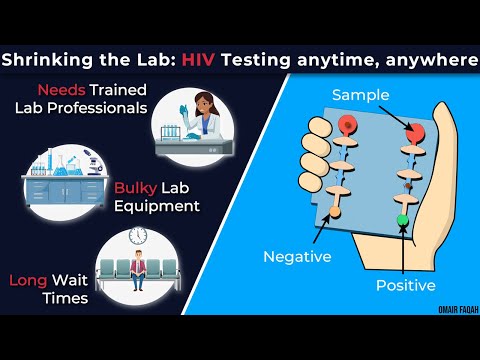
A $2 portable HIV test chip that combines PCR-level sensitivity with home-test simplicity. Using magnetic microparticles, custom probes, and automated processing, it delivers rapid color-change results from a single drop of blood. The system could diagnose HIV and other viruses quickly, affordably, and anywhere.

Chocolate production is declining due to climate change and disease, threatening global supply. Ecuador’s cacao variety CCN-51, created by Omero Castro Zurita in 1965, offers a disease-resistant, high-yield solution. This MFA documentary project highlights his overlooked legacy and investigates whether CCN-51 can sustainably address the global cocoa shortage.

This study examined anxiety in online learning using surveys and qualitative responses. Higher social presence reduced anxiety, while higher teaching presence unexpectedly increased it. Students preferred peer-led groups, frequent low-stakes tests, and clear instructor guidance. The findings suggest practical strategies to design online courses that better support anxious students.

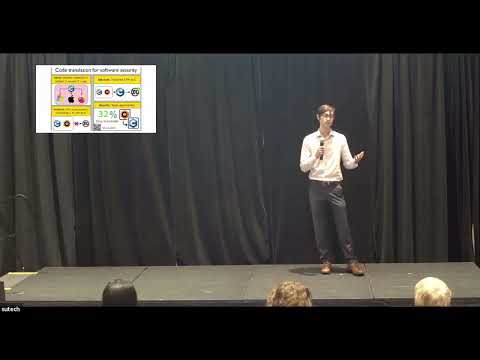
Modern software suffers from widespread memory-safety bugs, largely due to the C programming language. DARPA’s TRACTOR project aims to convert C into the safer Rust language, but real systems mix C and C++. This research develops methods to translate C++ into C, enabling full conversion to Rust and ultimately making software safer.