This research investigates how PFAS “forever chemicals” transfer from fish to their eggs and impact embryonic development. Findings show PFAS increase cellular stress in rainbow trout eggs, potentially affecting survival. Understanding where these chemicals accumulate could inform environmental policy and help protect aquatic ecosystems from long-term generational contamination.
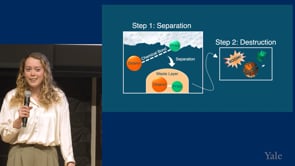
This research presents a simple, low-energy method to remove and destroy PFAS “forever chemicals” from water. By chemically transforming PFAS to behave less like soap, over 98% can be separated and fully degraded, offering a scalable and environmentally friendly solution to widespread drinking water contamination.

The Arctic is no longer pristine. “Forever chemicals” like OPEs and PFAS are accumulating in wildlife and ecosystems, threatening Inuit food sources. By studying Arctic seabirds as early-warning indicators, this research provides critical evidence to inform regulation and protect vulnerable environments and communities.
PFAS “forever chemicals” contaminate water, food, and air and accumulate in the body, causing serious health risks. This research develops a light-activated porous material that traps and breaks down PFAS molecules. Tested in real-world water and now being scaled up, the method aims to provide a practical, permanent solution for removing PFAS and protecting safe drinking water.

2024
My research tackles PFAS (polyfluoroalkyl substances) or “forever chemicals,” found in everyday products and linked to serious health risks. Blood testing shows 95% contamination rates. The project identifies specialised bacteria capable of breaking PFAS down nearly completely within days, offering a promising biological solution to reduce environmental and human exposure to these persistent toxic chemicals.