This research explores how displacement and silence shape the identities of adult children of Central American immigrants. Through interviews, it examines fragmented senses of self and links displacement-related grief to lower college belonging and retention, arguing for curricular, mentoring, and community-based interventions in higher education.
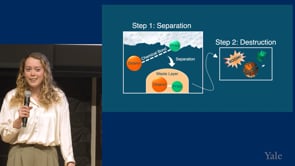
This research presents a simple, low-energy method to remove and destroy PFAS “forever chemicals” from water. By chemically transforming PFAS to behave less like soap, over 98% can be separated and fully degraded, offering a scalable and environmentally friendly solution to widespread drinking water contamination.
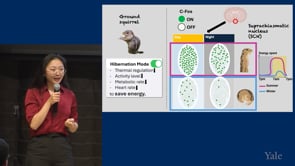
This research shows that the brain’s suprachiasmatic nucleus acts not only as a daily clock but also a seasonal energy switch. Studying hibernating ground squirrels reveals how neural activity shifts between high-energy summer states and ultra-efficient winter modes, with implications for metabolism, seasonal depression, and human hibernation.
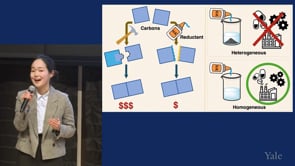
This research develops stable, low-cost homogeneous reductants that act like “super glue” for chemical bond formation. By replacing unpredictable metal powders, it enables more efficient, scalable, and affordable chemical synthesis, with major implications for pharmaceuticals, advanced materials, and sustainable industrial chemistry.
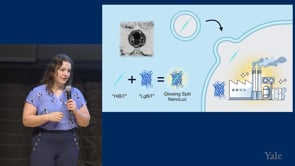
This research develops a rapid, light-based method to study viral fusion, the first step of infection. By applying split NanoLuc technology to HIV, it reveals strain-specific fusion behaviors and unexpected regulatory steps, providing tools that can accelerate responses to future pandemics such as COVID-19.
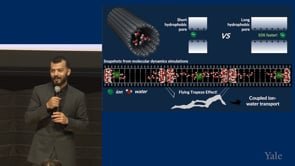
This research uses molecular simulations to study how ions and water move through nanopores, revealing counterintuitive effects of pore length and ion–water coupling. Understanding these nanoscale transport mechanisms helps improve desalination membrane design and provides insight into highly efficient biological channels such as aquaporins.
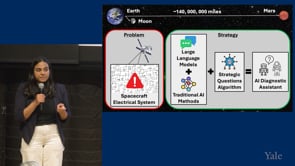
This research develops an onboard AI diagnostic assistant for space missions that can independently investigate life-critical anomalies. By learning how humans ask strategic diagnostic questions, the system combines language models and traditional AI to actively reason through unprecedented spacecraft failures when communication with Earth is delayed.
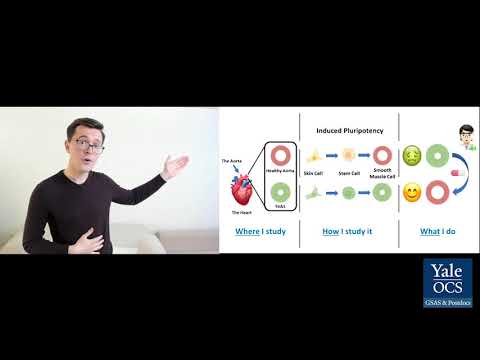
SVAS (Supravalvular Aortic Stenosis) is a rare condition where the aorta loses elasticity, causing dangerous thickening and narrowing. Using stem-cell technology, the researcher converts skin cells into aortic smooth muscle cells to study the disease and test treatments. A promising compound restores elasticity-related structures, offering hope for future therapies and broader disease modelling.