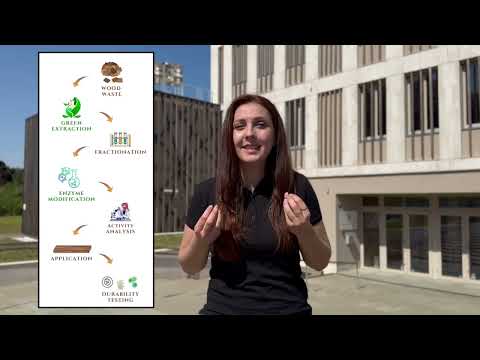
This research transforms wood waste into bio-based protection agents for construction timber. Using green extraction methods and enzymatic modification, natural compounds are isolated and enhanced to replace toxic chemical treatments. Laboratory testing confirms their antimicrobial, antioxidant, and weather-resistant properties, supporting sustainable wood protection and circular economy principles.
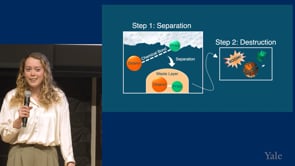
This research presents a simple, low-energy method to remove and destroy PFAS “forever chemicals” from water. By chemically transforming PFAS to behave less like soap, over 98% can be separated and fully degraded, offering a scalable and environmentally friendly solution to widespread drinking water contamination.
Chemical reactions are often slow and depend on catalysts. This research shows that simply applying electrical charge to a catalyst—without using energy—dramatically accelerates reactions, increasing rates tenfold for every 60 mV. A AA battery can reduce a universe-long reaction to one second, offering a powerful, sustainable route for chemical manufacturing.
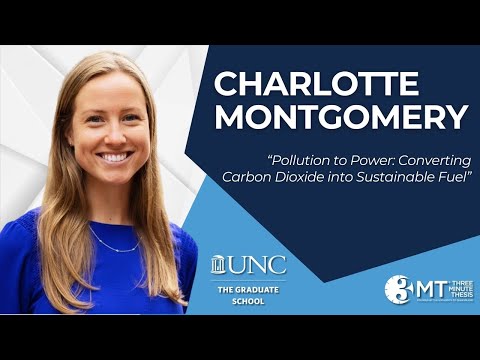
This research develops improved catalysts that convert atmospheric carbon dioxide into sustainable fuel. By analysing how molecular design affects reaction efficiency, selectivity, and durability, the work creates strategies to accelerate the chemical process and prevent breakdown. The findings support large-scale renewable energy storage and help integrate clean fuels into future energy systems.
This research designs simplified, custom-built proteins to understand how natural proteins work and to create new biocatalysts. By choosing a desired function and designing the amino-acid sequence and structure from scratch, the project aims to develop clean, efficient protein-based alternatives to environmentally harmful industrial chemistry.