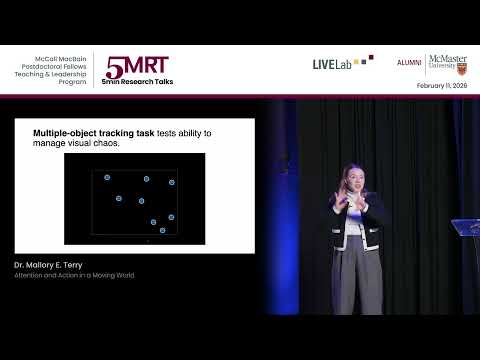
Humans can track about four moving objects at once using mental pointers known as “fingers of instantiation.” Laboratory experiments show these pointers help both track objects and guide actions. When attention shifts to new objects, performance declines. Understanding these limits helps explain rapid decisions in sports and everyday tasks like driving.

This research investigates online gambling addiction among young Nigerians, examining how pervasive gambling advertising shapes behavior and mental health. By analyzing public service announcements and international policies, the study calls for targeted, youth-centered media interventions to promote responsible gambling and prevent harm, despair, and loss of life.
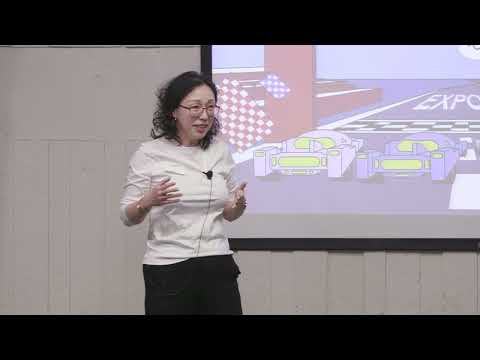
This research examines export activities of 1.5-generation immigrant entrepreneurs in Canada. Using data from over 5,000 firms, it shows that although fewer engage in exporting, their businesses perform significantly better financially—especially when exporting across greater institutional distance—highlighting their unique economic value and policy relevance.
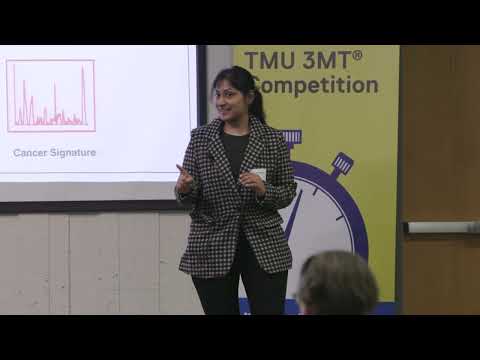
This research uses immune cell “molecular fingerprints” to rapidly detect cancer from a single drop of blood. By combining nanosensors and machine learning, subtle changes in B cells can be identified within minutes. The approach offers fast, accurate, and low-cost cancer detection with the potential to significantly improve early diagnosis and survival.

The Arctic is no longer pristine. “Forever chemicals” like OPEs and PFAS are accumulating in wildlife and ecosystems, threatening Inuit food sources. By studying Arctic seabirds as early-warning indicators, this research provides critical evidence to inform regulation and protect vulnerable environments and communities.
Large unstructured lecture breaks often disrupt learning, causing distraction and poor recall. This research tests structured “consolidation pauses” where students spend 2–5 minutes reviewing material before break. Results show improved retention, better peer relationships, and up to a full letter-grade boost, demonstrating that small instructional changes markedly improve learning outcomes.
2025
The speaker develops a decentralised communication framework for collaborative robots (cobots). By removing the central server and enabling robots to communicate directly through estimating unknown variables, the system reduces cost, time, and memory use. This foundation supports efficient task allocation for applications like delivery and firefighting.
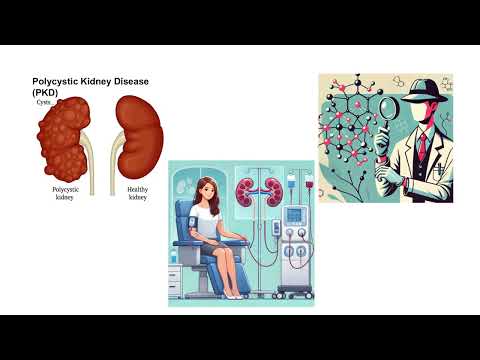
The speaker studies polycystic kidney disease by identifying missing or damaged proteins that destabilize the kidney’s filtration network. Using BioID and mass spectrometry, they map healthy versus diseased protein interactions to pinpoint weak spots. This work aims to enable targeted therapies and personalised treatments for PKD patients.
The speaker explains how hyperspectral satellites can detect invisible methane emissions, a major driver of climate change. Their research integrates data from multiple satellites to create a continuous global monitoring system capable of identifying leaks in real time, enabling rapid mitigation and transforming satellite technology into a tool for planetary sustainability.
A biomedical engineering team developed a handheld device that measures newborn heart rate in under 10 seconds—far faster than current tools. Using a novel sensor and real-time algorithms, it improves clinicians’ ability to intervene within the critical first minute after birth. Clinical trials are complete, the device is patented, and commercialization is underway.