
This research investigates tularemia, a highly infectious disease caused by Francisella tularensis, and explores a weakened bacterial strain as a vaccine candidate. By studying how the pathogen evades immune defenses, the work aims to enable rapid immune recognition and response, improving protection against both natural infections and potential biothreats.
Genetic cardiomyopathies arise from DNA errors that disrupt vital heart proteins and can be fatal in childhood. This research improves heart-targeted gene therapy by guiding treatments through the bloodstream using chemokine “traffic signals” and avoiding immune interference, enabling therapies to reach the heart more efficiently and potentially cure inherited heart disease.
2025
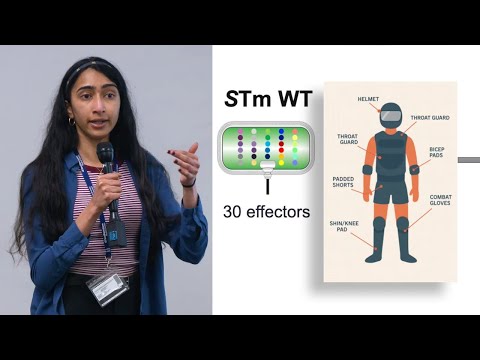
By stripping Salmonella of its molecular “effectors,” this research identifies interferon gamma as a key immune barrier preventing infection. A small set of SPV genes enables the bacterium to overcome this defense. Understanding these mechanisms reveals new targets for therapies against Salmonella, a major global health threat.

Human T-cell Leukemia Virus (HTLV) is a highly neglected virus that causes leukemia and neurodegeneration, with no current treatment. The researcher has developed siRNA-based RNA drugs that suppress the virus by up to 90%, prevent reactivation, and can be delivered via a nasal spray. This breakthrough could become the first effective antiviral therapy for HTLV.
My research investigates tiny particles released by metastatic cancer cells—messengers that help cancer hide from the immune system. By capturing and analysing these particles, the study aims to uncover how they evade detection and to develop new strategies that “teach” the immune system to recognise and neutralise them, leading to safer, more effective cancer therapies.