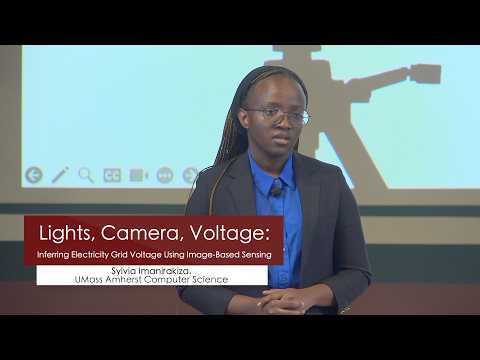
This research uses computational photography and machine learning to monitor electricity quality through the flickering patterns of everyday lights. By analyzing images captured in cities such as Kampala and Nairobi, the work offers a low-cost method for measuring voltage instability and improving power-grid planning in underserved communities lacking reliable electricity infrastructure.
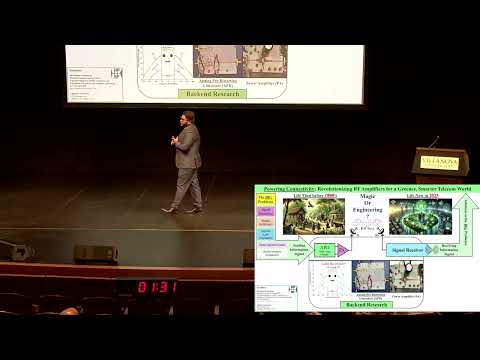
This research improves RF and microwave power amplifiers by reducing signal distortion using analog predistortion. The approach enhances energy efficiency, signal quality, and reliability in wireless and satellite communication. By producing near-ideal signals, it supports future connectivity demands and contributes to greener, more efficient telecommunications infrastructure.
This research develops privacy-preserving, decentralised AI systems where devices learn collaboratively without sharing raw data. Inspired by natural systems like bee colonies, it enables adaptive, self-organising cooperation among devices. The approach improves performance in heterogeneous environments, such as smart cities, while complying with data protection constraints like GDPR.