This research examines why businesses remain in disaster-prone regions despite increasing climate risks. Using satellite imagery and business location data, it shows that firms often stay because local supplier networks, skilled labor pools, and community relationships create valuable economic advantages. Strengthening community resilience may therefore be more effective than encouraging relocation.
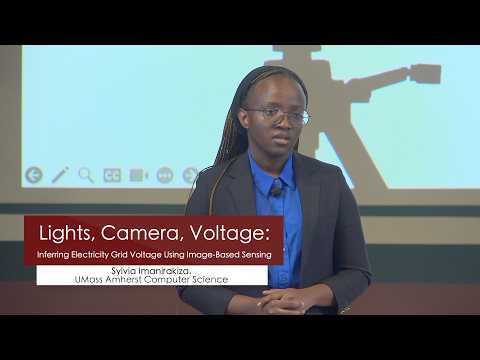
This research uses computational photography and machine learning to monitor electricity quality through the flickering patterns of everyday lights. By analyzing images captured in cities such as Kampala and Nairobi, the work offers a low-cost method for measuring voltage instability and improving power-grid planning in underserved communities lacking reliable electricity infrastructure.
Inspired by childhood experiences on the Navajo Nation, this research examines how Native American tribes use renewable energy to address energy insecurity and achieve energy sovereignty. Through interviews and site visits, it highlights infrastructure challenges, economic burdens, and policy gaps, advocating for inclusive renewable energy policies to support reliable, affordable, and sustainable tribal energy systems.
This research seeks to reduce the energy consumption of 4G and 5G networks—currently about 3% of global usage—by identifying the factors that drive it. By modelling how elements like signal noise affect energy demands in antennas and processing hardware, the project aims to guide the design of more efficient, sustainable mobile networks.