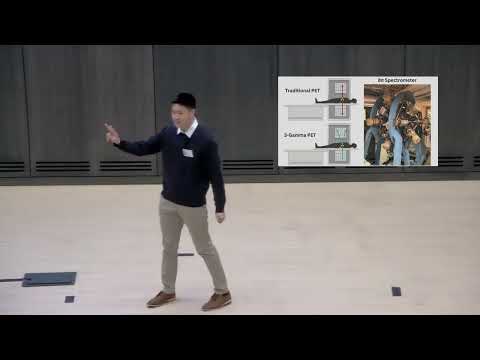
This research explores “three-gamma PET,” a method that uses rare but information-rich gamma-ray events normally ignored by traditional PET imaging. By capturing and reconstructing these events with a custom 8π spectrometer, the project shows that three-gamma PET could improve accuracy, reduce scan time, and lower radiation dose, offering better diagnostics for cancer patients.
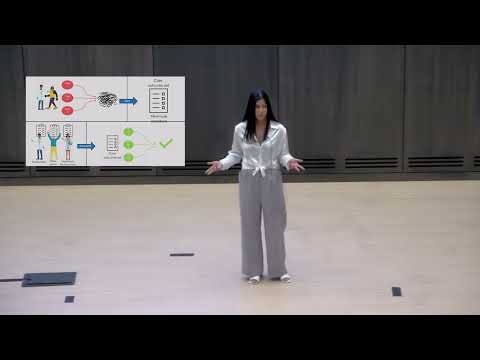
This research creates a core outcome set for clinical trials of physical activity in older adults. Because trials currently measure inconsistent outcomes, evidence cannot be easily combined. Using a multi-round expert and stakeholder survey, the project will establish essential outcomes to reduce research waste, improve knowledge synthesis, and strengthen healthcare decisions.
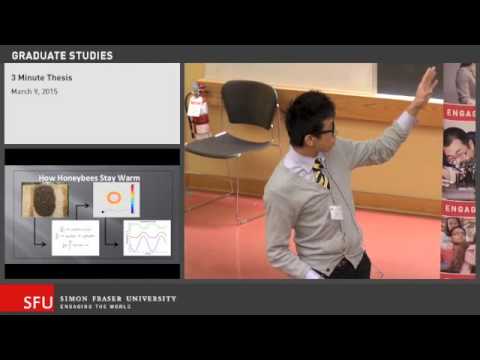
This research develops mathematical models to understand how honeybee clusters survive extreme cold without their hive. Using temperature and density equations, the model predicts how bees move, generate heat, and form insulating layers. Accurate simulations could reduce harmful field experiments and provide biologists with a powerful tool for studying bee behaviour.