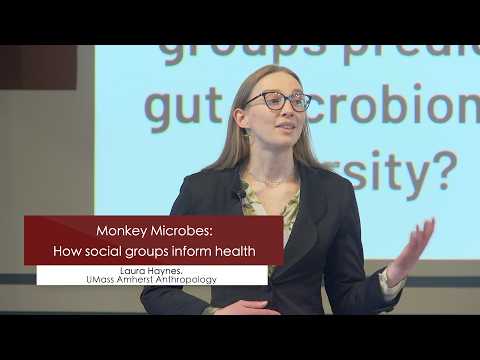
This study examined how intestinal parasite diversity changes with habitat dryness using Guinean baboons and West African crocodiles as models. Through DNA metabarcoding of 258 samples, multiple parasite species—including some zoonotic—were identified. Results showed that parasite richness decreases with increasing aridity, especially in terrestrial hosts, highlighting ecological and public health implications in climate-sensitive regions.
Australia’s wildlife is hard to count due to difficult terrain and vast landscapes. This research uses remote sensing—camera traps, audio recorders, drones, and satellites—combined with AI and mathematical models to understand animal presence, habitat choices, and detectability. The goal is faster, more accurate population monitoring to guide conservation.
Iowa’s prairies are nearly gone, but restored prairies may cool local climates through evaporative cooling. Deep-rooted, structurally diverse plants increase water transfer to the atmosphere, reducing surface and air temperatures. Using drones, LiDAR, and flux towers, the researcher quantifies prairie cooling as a climate-mitigation tool.
The Mississippi River relies on dams for commercial navigation, but these structures block fish migration and damage ecosystems and local fishing economies. This research uses hydrodynamic modelling to test fish-passage designs, such as bypass channels, showing how they can reconnect habitats, support biodiversity, and allow economic and ecological goals to coexist.
Bur Oak Blight threatens Iowa’s most iconic tree. Current detection is slow and often too late. This research uses leaf-level reflectance and satellite imagery to identify early, invisible signs of infection across millions of trees. The approach enables rapid mapping of blight severity and helps protect Iowa’s ecological and cultural heritage.
This research develops mathematical models to understand how honeybee clusters survive extreme cold without their hive. Using temperature and density equations, the model predicts how bees move, generate heat, and form insulating layers. Accurate simulations could reduce harmful field experiments and provide biologists with a powerful tool for studying bee behaviour.
antifreeze chemicals are toxic. This research tests new ice-recrystallization inhibitors that enter embryos easily, cause minimal developmental effects, and prevent damaging ice-crystal growth. These findings could enable long-term genetic preservation and support future ecosystem restoration.
My research uses artificial intelligence to detect water pollution by analysing DNA traces left by aquatic species. Instead of relying on visual signs or costly expert identification, supervised machine learning reads species patterns to determine water quality. The method is faster, cheaper, and more accurate than traditional analysis.