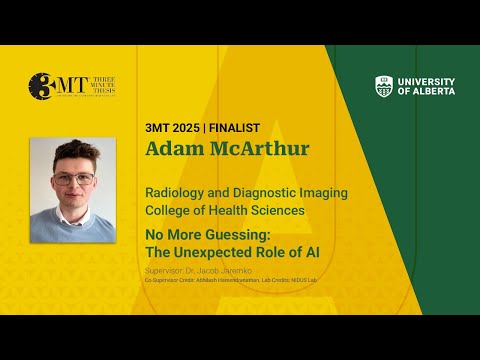
Hip dysplasia is often diagnosed too late or too inconsistently, leading to lifelong pain. The speaker’s research builds the first open-access AI tool for detecting and studying the condition, enabling portable automated diagnosis and global collaboration. By sharing tools instead of guessing, researchers can reduce unnecessary surgeries and improve outcomes worldwide.

Bowel cancer kills thousands each year, and current stool-based screening misses many cases. This PhD develops a new non-invasive method that analyzes human cells shed into stool, aiming to detect normal, pre-cancerous, and cancerous changes more accurately. The goal is a more reliable, higher-participation screening tool that could replace the existing national test.

The talk highlights how biology involves unseen interactions and how distinguishing living from dead microorganisms is essential. Using the chemical PMA (propidium monoazide), researchers can identify active pathogens and reduce misinterpretation in diagnostic tests, especially for viruses that cannot be grown in labs. This technique helps improve diagnostics, guide treatments, and advance microbiological research.

Mel-AI is an artificial intelligence system designed to assist pathologists in distinguishing melanoma from benign moles. By training computer-vision models on 520 cases, the system reached 96% accuracy and interpretable outputs. It offers scalable, objective quality assurance, reducing misdiagnosis risk and improving melanoma detection in high-incidence countries like Australia.