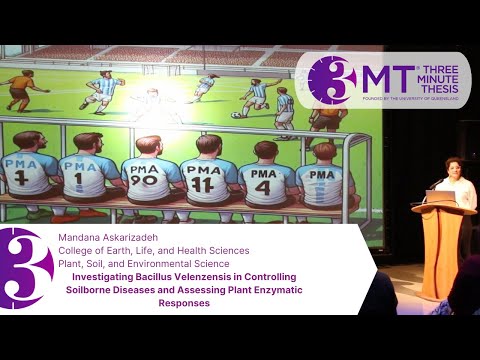
The talk highlights how biology involves unseen interactions and how distinguishing living from dead microorganisms is essential. Using the chemical PMA (propidium monoazide), researchers can identify active pathogens and reduce misinterpretation in diagnostic tests, especially for viruses that cannot be grown in labs. This technique helps improve diagnostics, guide treatments, and advance microbiological research.
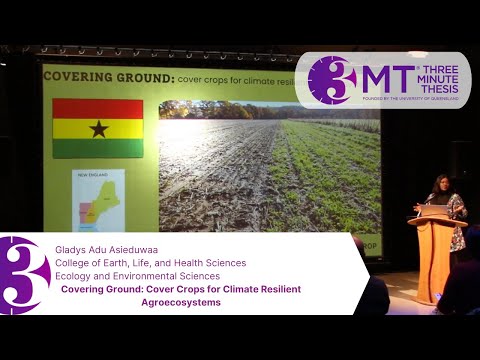
The research promotes interseeding—planting cover crops alongside cash crops—to help farmers in short-season climates protect soil, retain nutrients, and boost resilience. By identifying optimal planting times, crop mixes, and methods, the work dispels myths about competition and shows that interseeding can improve yields and soil health without compromising crop quality.
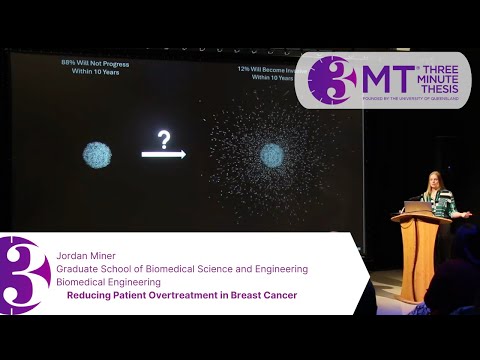
My research investigates collagen-binding receptors on breast cancer cells as potential biomarkers to distinguish harmless early-stage tumours from aggressive ones. Using genetically matched 3D cancer models, the project identifies how receptor activity affects invasion and collagen organization, aiming to reduce overtreatment and support clearer clinical decisions for early breast cancer patients.