
This research investigates the diversity and behaviour of zooplankton around Rangitāhua, Aotearoa New Zealand. By combining microscopy and underwater acoustics, it identifies species and tracks their daily vertical migrations. The findings will improve understanding of marine ecosystems, climate change impacts, and support Ngāti Kuri's stewardship of this culturally significant region.
2026
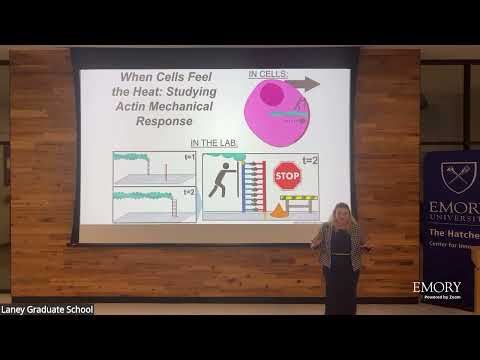
This research investigates how mechanical forces regulate cell movement using a novel DNA-based force probe. By measuring the force required to halt actin growth, it provides new insights into the mechanics of cell migration. The findings could ultimately help develop strategies to prevent cancer metastasis by controlling tumour cell movement.

2026
This research investigates how glioblastoma brain cancer cells invade healthy brain tissue. Using patient-derived tumor organoids and traction force microscopy, the study measures how cancer cells generate and apply forces to move through the brain. Understanding these invasion mechanisms could help develop therapies that slow tumor spread and improve patient survival.

This research explores asthma by recreating lung airways using 3D bioprinting. By simulating low-oxygen conditions and imaging structural changes, it investigates how exaggerated immune responses narrow airways. These models enable detailed study of disease mechanisms and offer a platform to develop treatments, ultimately advancing efforts toward preventing or curing asthma.

2026
This research investigates zinc batteries as a safer, cheaper alternative to lithium batteries. By studying the microscopic passive layer formed between zinc and electrolyte, it identifies mechanisms that improve performance and prevent failure. The work aims to enable more reliable, ethical, and fire-safe energy storage technologies through detailed materials analysis.
2026
This research uses nematode worms and machine learning to quantify changes in neuron structure linked to neurodegenerative diseases. By replacing subjective visual analysis with objective computational methods, it identifies structural abnormalities and improves understanding of disease mechanisms, supporting future advances in diagnosis and treatment.

This research uses a scanning tunneling microscope to visualize and measure individual atoms using quantum tunneling. By mapping surfaces atom-by-atom and probing electronic properties, it advances technologies such as nanowires, superconductors, and atomic-scale chips. Understanding materials at the quantum level enables better design of devices that impact energy, computing, and sustainability.

Presbyopia, the age-related loss of near vision, occurs when the eye’s crystalline lens stiffens. A known lens-softening drug, Bistatin, affects too many eye structures to be safe. This research creates a targeted antibody–drug conjugate that delivers Bistatin only to the lens, restoring flexibility and offering a potential non-surgical treatment.

Balanced cell growth is essential: too much can cause cancer, too little can cause skeletal disorders. This PhD project investigates a mysterious protein linked to dwarfism. By tagging it with GFP, the researcher discovered it drives fat-droplet formation, revealing a previously unknown function that may explain its powerful effects on body growth.