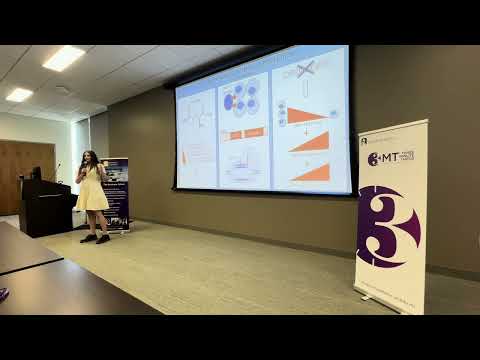
This research investigates how glutamine-rich regions within the LAG-3 protein influence Notch signaling, a critical pathway for cell communication and development. Using CRISPR gene editing, the study found that removing glutamine repeats alters stem cell behavior and cell-cycle progression, providing insights relevant to cancer, Alzheimer’s disease, and future therapies.

Using a Twilight analogy, this research explains antibiotic-resistant bacteria as “vampires” protected by membranes. By crystallizing membrane proteins and analyzing them with X-ray techniques, the study reveals their structure and function. This enables precise drug design to block these proteins, potentially overcoming antibiotic resistance and targeting harmful bacteria more effectively.

Balanced cell growth is essential: too much can cause cancer, too little can cause skeletal disorders. This PhD project investigates a mysterious protein linked to dwarfism. By tagging it with GFP, the researcher discovered it drives fat-droplet formation, revealing a previously unknown function that may explain its powerful effects on body growth.