Flash memory stores essential data but degrades with repeated use, limiting reliability in long-term applications like cars and satellites. Inspired by biological circadian rhythms, this research introduces “recovery periods” for memory cells to rest and repair. The approach improves flash memory lifespan up to ninefold, enabling more durable and dependable storage systems.
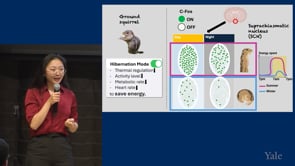
This research shows that the brain’s suprachiasmatic nucleus acts not only as a daily clock but also a seasonal energy switch. Studying hibernating ground squirrels reveals how neural activity shifts between high-energy summer states and ultra-efficient winter modes, with implications for metabolism, seasonal depression, and human hibernation.